


Most weight gain articles tell you to eat more without explaining what to eat more of. Some recommend protein powders without acknowledging that Nigerian food already contains some of the best weight gain ingredients available. We want to fix that by detailing ideal Nigerian foods for weight gain.
Our guide is based on real food composition data and nutrition research, including studies from Nigerian universities. It tells you specifically which Nigerian foods support weight gain, why they work, and how to eat them. You’ll also discover what to eat before and after the gym to make your training count.
Why Weight Gain Is Harder Than It Looks
Before we get into food, we need to name the one thing most people miss. Weight gain requires a consistent calorie surplus. Research shows that to gain weight as muscle rather than fat, you need at least 44 to 50 kilocalories per kilogram of body weight per day. You’ll combine that with adequate protein and resistance training.
For a 65kg person, it means roughly 2,860 to 3,250 calories daily. That’s more than most Nigerian meal patterns naturally deliver in two or three meals a day.
A 2024 cross-sectional study published in BMC Public Health involving over 1,000 Nigerian adults in Ekiti State found that dietary patterns directly affect body composition. The Western dietary pattern was associated with higher BMI outcomes. This research confirms what we see on the ground: Nigerians who consistently eat larger portions of calorie-dense traditional foods gain weight.
For hardgainers, the challenge is that Nigerian culture typically centres on two or three main meals. With no natural snack culture between meals, many people end up under-eating without realising it. Adding the right foods more frequently is the main adjustment most skinny Nigerians need to make.
The Best Nigerian Foods for Weight Gain
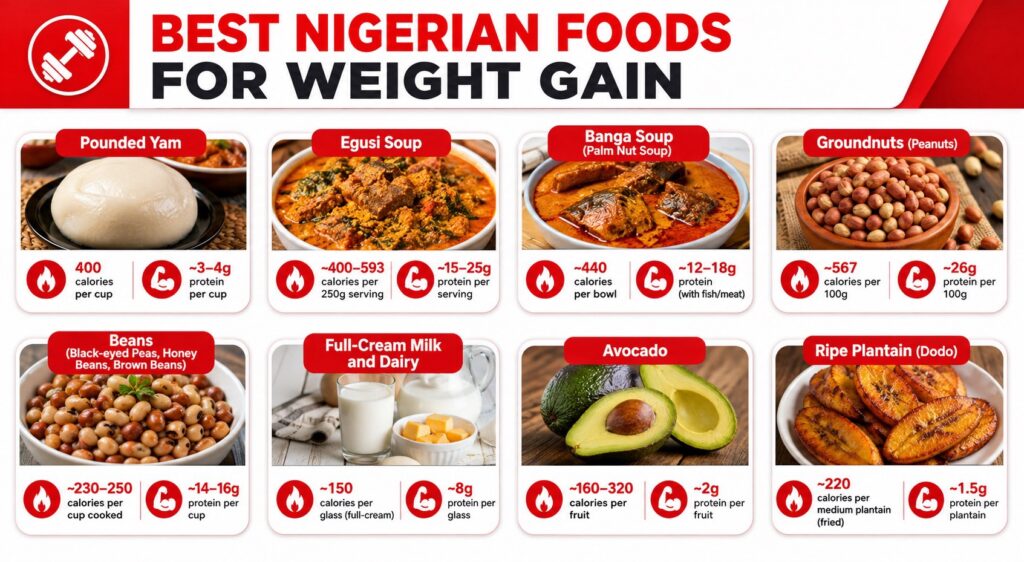
The best foods to gain weight in Nigeria are the ones that have enough calories and protein and are already in your kitchen. Here’s what the data says from our research:
| Pounded Yam ~400 calories per cup | ~3–4g protein per cup |
| Pounded yam is a calorie-heavy staple in Nigerian food. A single cup of pounded yam carries approximately 400 calories, and most Nigerian servings are two cups or more. Research from Nigerian food composition data, including studies from the University of Calabar and the African Journal of Food Science, confirms yam’s high complex carbohydrate content, which provides steady, sustained energy. Pair it with egusi soup and protein for a solid weight-gain meal. The combination of pounded yam and egusi soup together delivers 600 to 1,300 calories in a single meal depending on portions. |
| Egusi Soup ~400–593 calories per 250g serving | ~15–25g protein per serving |
| Egusi seeds (melon seeds) are nutritional powerhouses. Research from NutriScan and food composition databases shows egusi contains 28% protein and 52% fat per 100g. The fat is predominantly heart-healthy unsaturated fatty acids: linoleic and oleic acids. A standard bowl of egusi soup provides 400 to 593 calories with 15 to 25g of protein. For weight gain, egusi soup cooked with assorted meat, fish, and stockfish is a high-calorie traditional Nigerian meal. The protein content rivals many imported supplements like Whey per serving. |
| Banga Soup (Palm Nut Soup) ~440 calories per bowl | ~12–18g protein (with fish/meat) |
| Banga soup is made from palm nut extract, which is naturally high in fat and calories. Before adding any swallow, a standard bowl of banga soup carries around 440 calories. Palm oil, the base of banga, is among the most calorie-dense cooking oils, at 120 calories per tablespoon. For people in the Niger Delta, South-South, and Edo communities where banga is a staple, this soup is a most practical weight-gain option. Cook it with periwinkle, fish, chicken, and assorted meat for maximum protein alongside the calorie load. |
| Groundnuts (Peanuts) ~567 calories per 100g | ~26g protein per 100g |
| Groundnuts are almost everywhere in our country. A PMC-published study on Nigerian indigenous legumes confirmed that groundnut (Arachis hypogaea) had the highest protein, carbohydrate, and fat content of all legumes tested, along with superior mineral content. At 567 calories and 26g of protein per 100g, a small bag of groundnuts between meals adds significant calorie and protein intake without requiring you to sit down for another full meal. This is one of the most practical tools for hardgainers: portable, cheap, always available. |
| Beans (Black-eyed Peas, Honey Beans, Brown Beans) ~230–250 calories per cup cooked | ~14–16g protein per cup |
| The same PMC study on Nigerian legumes confirmed that cowpea (Vigna unguiculata, the black-eyed pea used in most Nigerian cooking) contains essential amino acids in ranges considered adequate for ideal protein food. Beans are the most affordable consistent protein source in Nigeria. If the goal is weight gain, cook beans in more palm oil than usual, eat them with fried plantain, and pair them with eggs or sardines to increase the meal’s total calories and protein. |
| Full-Cream Milk and Dairy ~150 calories per glass (full-cream) | ~8g protein per glass |
| Liquid calories are one of the most practical weight gain tools because they don’t fill you up the way solid food does. A glass of full-cream Peak milk has 150 calories and doesn’t reduce your appetite for the next meal. Add Milo or Ovaltine, and you’re at 250 to 350 calories per drink. For Nigerian hardgainers who struggle to eat large volumes of food, adding full-cream milk between meals, with meals, and as part of breakfast pap or porridge can be an effective strategy. Always use full-cream, not slim or low-fat versions. |
| Avocado ~160–320 calories per fruit | ~2g protein per fruit |
| Avocados have become more widely available across Nigerian markets in recent years, especially in the south, Middle Belt, and seasonal markets in the north. A medium avocado carries around 160 to 320 calories, almost entirely from healthy monounsaturated fat. Spread on Agege bread, eaten alongside rice, or mashed with a pinch of salt as a snack, avocados add meaningful calories without making meals feel heavier. For families in states like Benue, Plateau, and the south-east, where avocados are locally grown and cheap, this is an affordable weight-gain food. |
| Ripe Plantain (Dodo) ~220 calories per medium plantain (fried) | ~1.5g protein per plantain |
| Ripe plantain is a side dish that pairs well with almost every Nigerian protein meal. A medium fried ripe plantain carries roughly 220 calories. Combined with beans (which provide the protein), fried plantain and beans are a practical, affordable, and genuinely calorie-dense Nigerian weight-gain meal. When considering weight gain specifically, frying plantain adds more calories than boiling it, the opposite advice from what you’d hear for weight loss in Nigeria. |
Pre-Workout Food in Nigeria: What to Eat Before Training

What you eat before training doesn’t need to be complicated. Research from the National Academy of Sports Medicine recommends consuming 30 to 60g of carbohydrates plus 5 to 10g of protein approximately 30 to 60 minutes before exercise.
Carbohydrates fuel the workout; protein prepares the muscle for the repair process that follows. Here are practical Nigerian pre-workout meals that meet this science:
| 1 hour before | Pap (ogi) with full-cream milk and 2 boiled eggsPap gives fast-digesting carbohydrates, milk adds protein and calories, and eggs deliver complete protein with all essential amino acids. Simple, fast to prepare. |
| 1 hour before | Akara (4 pieces) with a glass of full-cream MiloAkara is fried beans, combining carbohydrates and plant protein. The Milo adds simple carbohydrates for quick energy during training. |
| 45 mins before | 1 medium ripe banana + handful of groundnutsBanana provides fast-acting carbohydrates that hit the bloodstream quickly. Groundnuts add protein and fat to sustain energy. |
| 30 mins before | 2 slices of bread + groundnut paste (peanut butter)Bread provides carbohydrates, groundnut paste provides protein and healthy fat. Quick to prepare, affordable, and available anywhere. |
Post-Workout Food in Nigeria: What to Eat After Training
After training, you should focus on protein and carbohydrates together. A 2013 review published in the Journal of the International Society of Sports Nutrition confirms that consuming 20 to 40g of protein within two hours post-workout maximally stimulates muscle protein synthesis.
Carbohydrates consumed alongside protein replenish glycogen stores and reduce muscle breakdown. The research recommends a carbohydrate-to-protein ratio of approximately 3:1 to 4:1 after training.
From our findings, these are Nigerian foods that meet this requirement well:
| Within 1 hour | Pounded yam (1 medium ball) + egusi soup with fish and assorted meatThe pounded yam replenishes glycogen. The egusi and meat deliver 20–30g of protein for muscle repair. One of the most effective post-workout Nigerian meals you can eat. |
| Within 1 hour | Rice + stew + 2 boiled eggs + fried plantainRice replenishes glycogen stores. Eggs provide fast-digesting complete protein. Stew adds protein and fat. A balanced post-workout meal that most Nigerians already eat. |
| Within 30 mins | 3 boiled eggs + a glass of full-cream milkQuick, easy, no cooking needed. Three eggs provide 18g of complete protein. Full-cream milk adds carbohydrates, protein, and leucine (the specific amino acid that triggers muscle protein synthesis). |
| Within 1 hour | Beans (1 cup) + boiled ripe plantain + 1 tin sardinesBeans provide plant protein. Sardines add 20g+ of protein. Plantain provides the carbohydrates for glycogen replenishment. A complete post-workout meal for under ₦2,000. |
If you have a creatine supplement, you can also take it after your workout.
A Simple Nigerian Weight Gain Meal Plan
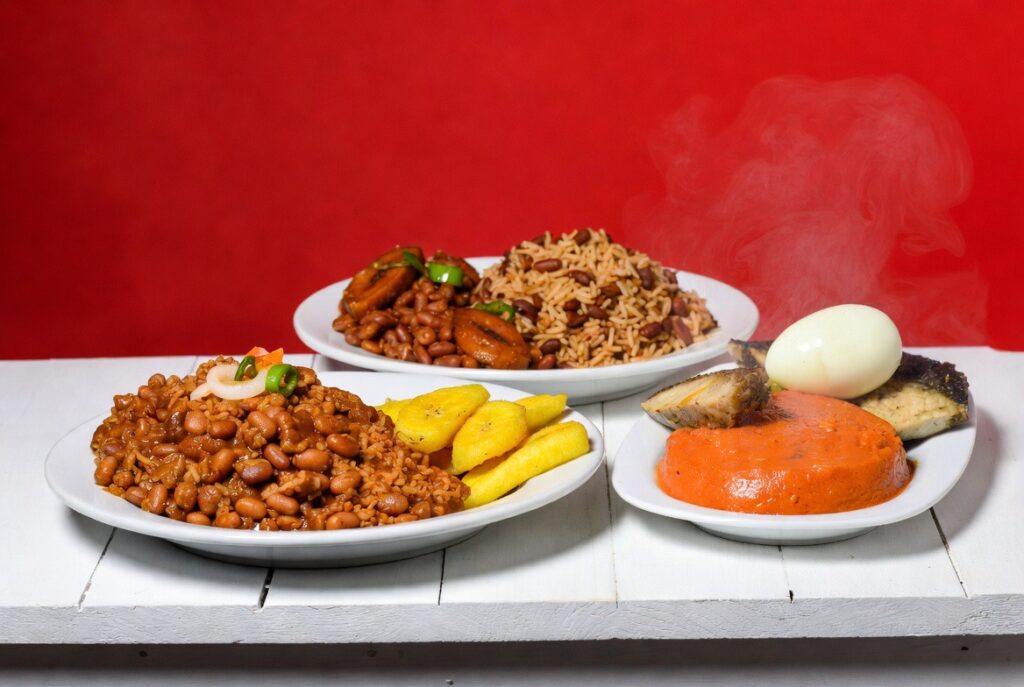
The structure is simple: five eating occasions daily, each with a combination of protein and calorie-dense carbohydrates. Here’s what we recommend:
- Breakfast (7am): Pap with full-cream milk + 2 boiled eggs + akara. High-carbohydrate, high-protein start to the day.
- Mid-morning snack (10:30am): Handful of groundnuts + 1 ripe banana + glass of Milo with full-cream milk. Adds 400 to 500 calories between meals.
- Lunch (1:30pm): Pounded yam (2 medium balls) + egusi soup with assorted meat and stockfish. The biggest meal of the day, targeting 900 to 1,200 calories.
- Afternoon (4:30pm): 2 slices of bread + groundnut paste + full-cream milk. Keeps the calorie surplus consistent without requiring another full meal.
- Dinner (7:30pm): Rice + stew + fried plantain + chicken or fish. Close the day with protein and carbohydrates for overnight muscle repair.
This plan targets 3,000 to 3,500 calories daily. So, it’s a genuine surplus for most Nigerian adults that supports real weight gain when combined with consistent training.
Bottom Line
Eating Nigerian food for weight gain is genuinely excellent. We don’t say it because we’re being patriotic, but because Nigerian cuisine is naturally calorie-heavy and protein-rich. Also, it’s built around the kinds of complex carbohydrates and healthy fats that support body composition goals.