

Protein is the most talked-about nutrient in Nigeria’s fitness community. You may be trying to build muscle, lose weight, or just eat better. Either way, you need protein.
Most Nigerians think getting enough protein means buying expensive imported supplements or eating chicken every day. That’s not true. Nigeria has some of the most protein-rich and affordable foods in the world.
The issue is that most people don’t know the numbers behind what they’re eating. That’s where we come in. At GymSquare NG, we’ve broken down the cheap protein sources in Nigeria, including everyday food and supplements. You can hit your protein target without spending more than you need to.
Why Protein Matters
Simply put, protein builds and repairs muscle. When you train, your muscles break down, and they need protein to recover and grow. If you don’t eat enough, you won’t see the results you are working for in the gym.
For the average Nigerian adult, the recommended daily protein intake is about 0.8g per kilogram of body weight. However, if you train regularly, that number goes up to 1.2g to 2g per kilogram. So a 70kg person who uses the gym in Nigeria should be eating between 84g and 140g of protein per day.
Most Nigerians aren’t eating anywhere near that amount, mainly because they don’t know which foods to focus on.
Cheap Nigerian Food Protein Sources
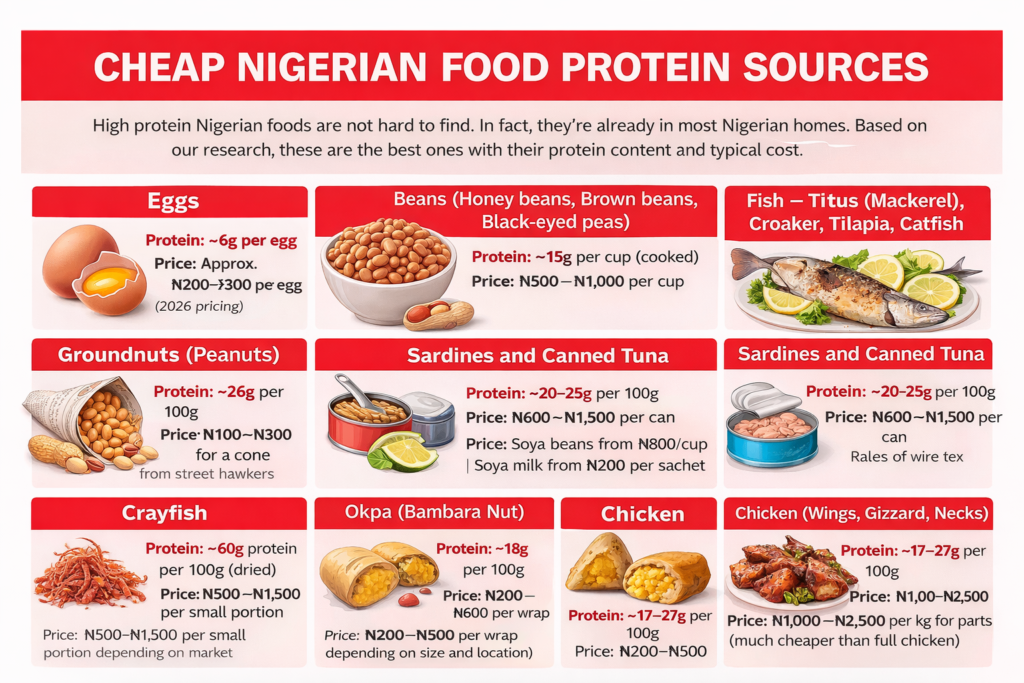
High-protein Nigerian foods are not hard to find. In fact, they’re already in most Nigerian homes. Based on our research, these are the best ones with their protein content and typical cost.
| Eggs |
| Protein: ~6g per egg Price: Approx. ₦200–₦300 per egg (2026 pricing)Boil them, fry them lightly, add to soups, make omelettes with ugu and tomatoes. Eggs are the most versatile protein food in Nigeria. |
| Beans (Honey beans, Brown beans, Black-eyed peas) |
| Protein: ~15g per cup (cooked) Price: ₦500–₦1,000 per cup, depending on market and variety. Beans porridge, moi moi, akara, beans and rice, beans and plantain. Moi moi is the best form for weight loss (steamed, not fried). |
| Groundnuts (Peanuts) |
| Protein: ~26g per 100g Price: ₦100–₦300 for a cone from street hawkersEat as a snack, add groundnut paste to soups, or blend into homemade peanut butter. Take small portions because groundnuts are also high in fat. |
| Fish — Titus (Mackerel), Croaker, Tilapia, Catfish |
| Protein: ~20–25g per 100g Price: ₦1,500–₦3,500 per medium-sized fish, depending on type and marketGrill or boil for the best results. Titus mackerel (canned or fresh) is one of the most affordable, high-protein fish in Nigeria. |
| Sardines and Canned Tuna |
| Protein: ~20–25g per 100g Price: ₦600–₦1,500 per can, depending on brand and sizeAdd to Indomie, rice, pasta, or eat with bread. One of the quickest, cheapest protein meals you can make in Nigeria. |
| Soya Beans and Soya Milk |
| Protein: ~16–18g per 100g cooked | ~8g per cup of soya milk Price: Soya beans from ₦800/cup | Soya milk from ₦200 per sachetOne of the highest plant protein sources in Nigeria. Soya milk made at home from blended soya beans is cheap, nutritious, and available everywhere. |
| Crayfish |
| Protein: ~60g protein per 100g (dried) Price: ₦500–₦1,500 per small portion, depending on marketUsed in almost every Nigerian soup. Small quantities go a long way. One of the most overlooked protein sources in Nigerian cooking. |
| Okpa (Bambara Nut) |
| Protein: ~18g per 100g Price: ₦200–₦500 per wrap, depending on size and locationMost popular in the southeast and south-south. A wrap of okpa for breakfast is one of the most nutritious, affordable meals available to Nigerians. |
| Chicken (Wings, Gizzard, Necks) |
| Protein: ~17–27g per 100g Price: ₦1,000–₦2,500 per kg for parts (much cheaper than full chicken)Chicken parts (wings, necks, gizzards) are significantly cheaper than a full chicken breast and still deliver good protein. Gizzard, in particular, is lean and high in protein. |
Cheap Protein Supplements to Buy in Nigeria

Protein supplements are available in Nigeria, but the truth is that they’re expensive. Therefore, they don’t really fit the “cheap” description. Here’s what the market looks like from our rewatch:
- Whey protein concentrate (entry level): Prices start from around ₦55,000 per container (30 servings) from local supplement stores. Each serving gives you about 20–25g of protein. That works out to roughly ₦1,800 per serving.
- Optimum Nutrition Gold Standard Whey: One of the most popular brands in Nigeria. A 2lb container costs from ₦80,000 to ₦120,000 depending on where you buy. Each serving is about 24g of protein.
- Nature’s Field Whey Protein: A locally available option that is more affordable than imported brands. Available from pharmacies and supplement stores, and the price is between ₦80,000 and ₦100,000.
- Soya protein powder: Some Nigerian health stores sell soya-based protein powder, which is a lot cheaper than whey. It’s a plant-based option that works for people who can’t afford or don’t want whey.
Should You Buy Protein Supplements?
Honestly, for most Nigerians, supplements are not necessary. With the current cost of whey protein in Nigeria, you can get the same amount of protein from food at a fraction of the price.
- One egg costs about ₦200 and gives you 6g of protein.
- A cup of beans costs about ₦700 and gives you 15g.
- A can of sardines costs ₦800 and gives you 20g.
- A serving of whey protein costs ₦1,800 and gives you 24g.
Whey protein is convenient and fast, especially after a workout. However, it’s not a better source than real food. So, if your budget is tight, we advise focusing on food first.
Consider supplements only if you:
- Struggle to eat enough protein from food alone
- Have very high protein targets (competitive athletes or heavy lifters)
- Need a fast post-workout option and can afford it
Cheap High-Protein Meal Ideas for Nigerians

You don’t need expensive food to hit your protein targets. Instead, try out our affordable combinations below:
- Beans and boiled egg: A plate of beans porridge with two boiled eggs gives you about 27–30g of protein for under ₦1,500.
- Moi moi with fish inside: Two wraps of moi moi made with mackerel inside can give you 20–25g of protein.
- Sardines with rice or yam: One can of sardines with a small plate of brown rice costs under ₦2,000 and gives you 20g+ of protein.
- Boiled eggs and oats: Two boiled eggs with a cup of oats for breakfast gives you 18–20g of protein and keeps you full until midday.
- Okpa: Two wraps of okpa for breakfast is one of the most complete, high-protein Nigerian breakfasts and costs under ₦1,000. You can grab this, especially if you’re in the south east.
- Groundnut and fruit. A small handful of groundnuts with a banana or orange as a snack gives you 10–12g of protein cheaply.
Nigerian Protein Sources FAQs
What is the cheapest protein in Nigeria?
Eggs and beans are the cheapest protein sources in Nigeria. A single egg costs about ₦250 and gives you 6g of protein. Beans give you about 15g of protein per cooked cup at roughly ₦700.
Which Nigerian food is high in protein?
The highest-protein Nigerian foods are crayfish (about 60g per 100g dried), groundnuts (26g per 100g), beans (15g per cooked cup), fish like titus and croaker (20–25g per 100g), eggs (6g per egg), okpa (18g per 100g), and soya beans (16–18g per 100g cooked).
Which Nigerian soup is high in protein?
Egusi soup cooked with fish, beef, or chicken is one of the highest-protein Nigerian soups. The egusi seeds themselves contain about 24g of protein per 100g.
What is the most consumed protein in Nigeria?
Beans is the most widely consumed protein food in Nigeria. It’s eaten across all regions in multiple forms — ewa agoyin, moi moi, akara, porridge, and with rice or plantain. Fish comes a close second, particularly dried fish, stockfish, and fresh titus
Our Final Word
The truth is that cheap protein sources in Nigeria are all around you. Examples are beans, eggs, fish, groundnuts, crayfish, and okpa: foods every Nigerian already knows. The goal is to make them a consistent part of your daily meals rather than an afterthought.
Supplements are also useful, but they’re not necessary for most people. Before you spend ₦80,000 on a tub of whey protein, make sure you’re consistently eating enough beans, eggs, and fish. Get your food protein right first, then supplements can fill gaps; they shouldn’t be the foundation.