


Most Nigerian fitness peeps never stop to ask: if you’re eating well and training hard, do you even need multivitamins for the gym? Well, our honest answer is one word: maybe.
It depends on what you’re eating, how hard you’re training, and whether your diet covers the nutrients your body burns through during exercise. For many Nigerians, though, there’s a serious problem.
Our research shows that a good percentage of Nigerian adults are deficient in at least one essential vitamin or mineral. When you add regular gym training to an already stretched diet, a multivitamin looks like a must-have.
Why Gym-Goers Need More Than the Average Person
When you train hard at a gym in Nigeria, your body uses more of certain nutrients than it would otherwise. This is not a marketing claim we’re making up. It’s basic exercise physiology.
Every time you lift weights or do intense cardio, your body produces free radicals. Those are molecules that damage cells. Vitamins C and E are antioxidants that neutralise them. If you don’t get enough of these vitamins, recovery slows, and your muscles take longer to repair between sessions.
B vitamins, such as B1, B2, B3, B6, and B12, help convert food into energy. The harder you train, the more B vitamins you use up. Someone doing five gym sessions a week burns through B vitamins much faster than someone who barely exercises. If levels drop, you feel tired, sluggish, and your performance suffers. That’s even if you’re sleeping and eating well.

Magnesium is another one that Nigerian gym-goers are often low in. It supports muscle contraction and relaxation, protein synthesis, and sleep quality. Intense exercise causes you to lose magnesium through sweat. Most Nigerian diets don’t replace it adequately.
Vitamin D is worth a separate mention. Nigeria gets abundant sunlight, which is how the body makes Vitamin D naturally. But many Nigerians who work desk jobs or train indoors don’t get enough sun exposure, particularly in Lagos and Abuja, where most of the day is spent in air-conditioned offices and cars. Low Vitamin D reduces muscle strength, slows recovery, and weakens the immune system.
| Vitamin/Mineral | Why gym-goers need it | Nigerian food source |
| Vitamin C | Repairs muscle damage, antioxidant, speeds recovery | Oranges, tomatoes, peppers, guava |
| B Complex | Converts food to energy, reduces fatigue | Beans, eggs, fish, groundnuts |
| Magnesium | Muscle function, sleep, protein synthesis | Beans, leafy vegetables, groundnuts |
| Vitamin D | Muscle strength, immune health, bone density | Sunlight, oily fish, eggs |
| Zinc | Testosterone production, immune function, wound healing | Crayfish, red meat, pumpkin seeds |
| Iron | Carries oxygen to muscles during exercise | Red meat, beans, leafy greens (women especially) |
Most of these nutrients exist in Nigerian food. The problem is that many Nigerians who train regularly don’t eat enough variety. Instead, they rely on the same few meals without enough vegetables, oily fish, or varied protein sources. A multivitamin fills that gap cheaply and consistently.
So, if you’re using the gym, don’t just focus on supplements like Creatine and Whey Protein. That stuff dey important, but no be only them you suppose take.
What to Look for in a Multivitamin for the Gym
Not every multivitamin in a store or supermarket rack is worth buying. Here’s what to check before you pay:
- B Complex included. This is non-negotiable for gym-goers. Check that the label lists B1, B2, B6, and B12 individually. If it just says ‘B vitamins’ without specifying which ones, avoid it.
- Vitamin D3 specifically. There are two forms — D2 and D3. The body absorbs D3 more effectively. The better products specify D3 on the label.
- Zinc and Magnesium. Especially important for men. These two minerals directly support testosterone levels and muscle recovery.
- Iron — check your gender. Women who train regularly often need iron because of menstrual blood loss. Men who eat red meat regularly usually don’t need extra iron. Some multivitamins come in gender-specific formulas for this reason.
- No mega-doses. Some supplements contain 1,000% of the daily value for certain vitamins. That’s not better — it’s wasteful and in some cases harmful. Look for formulas that stay within 100% to 200% of daily values for most nutrients.
Best Multivitamins for the Gym Available in Nigeria
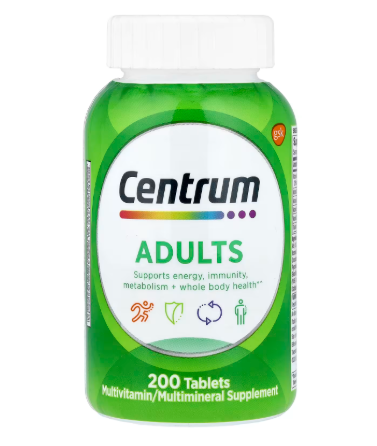
From our standpoint, the best multivitamin for gym-goers in Nigeria covers the key nutrients for training. You can find these products here, so you don’t need to import them from the UK. Here’s what’s currently on the market:
| Centrum (Men’s / Women’s) ₦30,000 – ₦70,000 |
| Best for: General gym-goers who want a reliable, well-known brand at a reasonable price. Centrum covers the basics well — B complex, Vitamin C, D, zinc, and magnesium. Both men’s and women’s versions are available. |
| Nutrify Men’s / Women’s Multivitamin ₦13,500 (30 tablets) — ₦18,500 (60 tablets) |
| Best for: Trainers who want a locally-made option with gender-specific formulas. Contains B complex, Vitamin C, D3, and Zinc specifically. |
| USN Multivitamin ₦20,000 – ₦50,000 |
| Best for: Active fitness enthusiasts and athletes. USN is a sports nutrition brand—their multivitamins are formulated for people who train, with higher doses of training-relevant nutrients than pharmacy brands. |
| Nature’s Field Multivitamin ₦14,000 – ₦40,000 |
| Best for: Budget-conscious gym members. Nature’s Field is the most widely available local brand. It covers the essentials at a price point that makes daily use sustainable. Not as comprehensive as Centrum or USN, but better than nothing. |
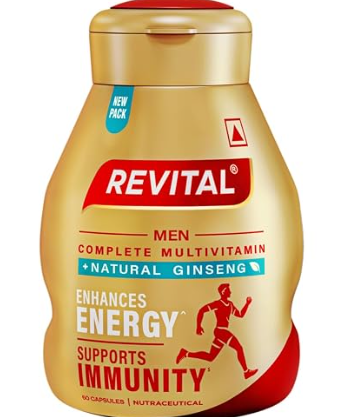
| Revital H (with ginseng) ₦4,000 – ₦7,000 |
| Best for: Gym-goers who also want energy and mental focus support. Revital H contains multivitamins plus ginseng — an adaptogen that supports stress management and sustained energy. Popular in Nigerian offices and gyms alike. |
Do You Actually Need a Multivitamin If You Eat Nigerian Food?
Many popular Nigerian foods like egusi, crayfish, beans, oily fish, liver, and leafy vegetables are genuinely nutritious. If you eat a varied Nigerian diet consistently, you’re probably already covering most of your micronutrient needs.
The problem is consistency. Most people who go to the gym don’t eat varied, home-cooked Nigerian meals every day. Instead, they eat out, grab fast food, skip meals, and eat rice and stew for the fifth day in a row. That’s where the gap opens up.
A multivitamin doesn’t replace food, and we’re not saying it does. But on days when your diet isn’t what it should be, it keeps your levels from dropping in ways that affect your energy and recovery.
Our honest recommendation: if you train three or more times per week, take a daily multivitamin. Not as a substitute for good food, but as insurance for the days when your food isn’t covering everything.
When to Take It
Take your multivitamin with a meal, not on an empty stomach. Fat-soluble vitamins like A, D, E, and K are absorbed better when taken with food that contains fat. Taking multivitamins on an empty stomach also causes nausea in some people.
Morning or evening doesn’t matter much. What matters is consistency, as we’ve hinted at before. Try to take it at the same time every day, so it becomes a habit. Put it next to your phone charger, your toothbrush, or wherever you’ll see it every day without thinking about it.
What a Multivitamin Won’t Do
It won’t replace protein sources and won’t build muscle on its own. It also won’t give you energy like a pre-workout or help you recover like sleep.
Also, don’t view multivitamins as mass gainers or anything like that. They’re the foundation, not the building. They keep the micronutrient side of your health from limiting everything else you’re working toward in the gym.
Final Word
Multivitamins for the gym in Nigeria don’t need to be expensive or complicated. Centrum covers the basics and is available at every major pharmacy. Nutrify offers a well-formulated, Nigerian-made option with nationwide delivery. USN is the choice for serious athletes who want a sports-specific formula. Nature’s Field is the most accessible budget option.
Start with one month. Take it every day with a meal. If your energy and recovery improve, then great. If not, your diet probably needs more attention than your supplement stack does.
Disclaimer: Prices are based on 2026 market data. Consult a doctor before starting any supplement if you have existing health conditions.