


Let me tell you something straight up: the problem isn’t your food. You can eat jollof rice, amala, egusi, beans, and anything else. They’re not your enemy.
I’ve eaten Nigerian food my entire life, and I’ve lost weight eating it. What I had to learn was which specific foods to eat more of and which to cut back on. Also, I discovered that the same food cooked two different ways can either support your weight loss or completely cancel it out.
As you read on, I’ll cover Nigerian food for weight loss properly. It’s not just a list of ‘eat more vegetables,’ but the actual science behind why certain Nigerian foods work for weight loss, and others don’t. I’m also going to tell you about a category of Nigerian food that research shows can help you shed fat.
What You Get Wrong About Weight Loss and Food
Most Nigerians think the problem with their diet is what they eat. But in many cases, the issue is how it’s prepared and how much of it they eat in one sitting.
Take egusi soup as an example. If you cook a pot of egusi with half a cup of palm oil, that soup is very high in calories. That’s before you even add any meat or fish.
However, if you prepare the same egusi with one tablespoon of palm oil and add more vegetables, you have a completely different meal in terms of calories. The egusi didn’t change, but the cooking method did. That matters a lot for weight loss.
The same thing applies to how much swallow you serve yourself. A typical Nigerian serving of pounded yam or eba is three to four times what you actually need. As such, the food isn’t the problem. The portion is.
The Glycemic Index of Nigerian Foods: Why It Matters for Weight Loss
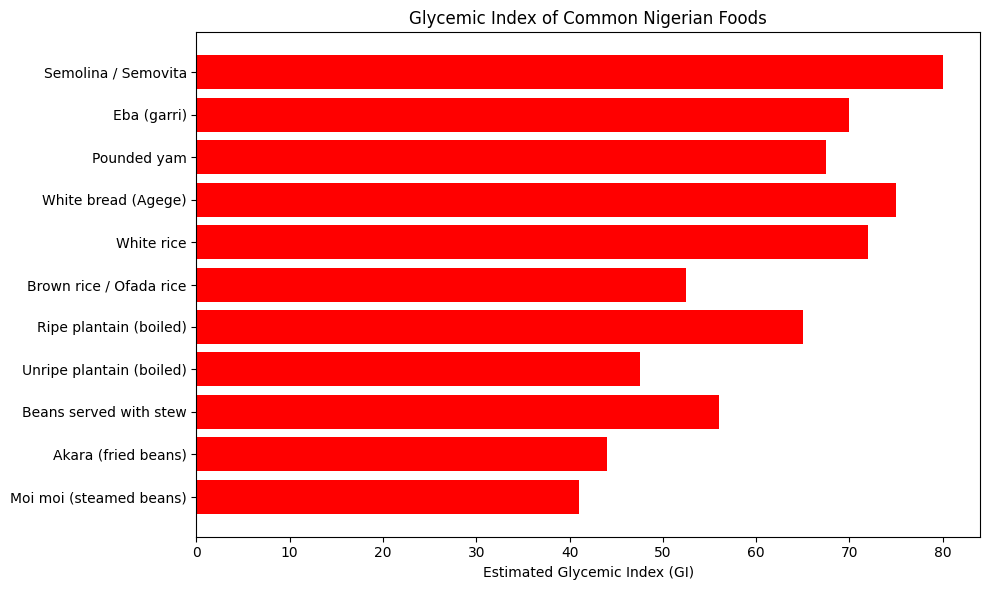
What Nigerian food is good for weight loss often comes down to something called the glycemic index. Yet, nobody explains it in plain terms. Let me do that here.
The glycemic index (GI) measures how fast a food raises your blood sugar after you eat it. High GI foods spike your blood sugar quickly, which triggers a large release of insulin. It’s followed by a blood sugar crash that leaves you hungry again, sometimes within an hour of eating.
Low GI foods raise your blood sugar slowly and keep you fuller for longer. Therefore, they reduce the amount of insulin your body releases. Nigerian researchers have actually tested the GI of our local foods. Here’s what they found:
| Nigerian Food | GI Score | GL Category | Weight Loss Verdict |
| Moi moi (steamed beans) | 41 | Low | ✔ Excellent — eat freely |
| Akara (fried beans) | 44 | Low | ✔ Good — but fried, so moderate portions |
| Beans served with stew | 56 | Moderate | ✔ Good — one of the better options |
| Unripe plantain (boiled) | ~45–50 | Low | ✔ Excellent — very filling |
| Ripe plantain (boiled) | ~65 | Moderate | ⚠️ Okay in small portions |
| Brown rice / Ofada rice | ~50–55 | Low-Moderate | ✔ Better than white rice |
| White rice | ~72 | High | ✖ Eat less, pair with protein |
| White bread (Agege) | ~75 | High | ✖ Avoid as main breakfast |
| Pounded yam | ~65–70 | High | ⚠️ Small portions only |
| Eba (garri) | ~70 | High | ⚠️ Small portions only |
| Semolina / Semovita | ~80+ | Very High | ✖ Avoid for weight loss |
The key takeaway from this table: moi moi has a lower glycemic index than pounded yam. Most Nigerians assume pounded yam is fine because it’s traditional, and moi moi is just a side dish. But for weight loss, moi moi is one of the best foods you can eat. It’s high protein, high fiber, low GI, and steamed, so there’s no extra oil absorbed in cooking.
The Fermented Food Angle
Here’s something I find interesting: Nigeria has a long tradition of fermented foods. Modern research shows that fermented foods can genuinely support weight loss, not through magic, but through their effect on gut health.
Nigerian fermented foods like iru (locust beans), ogiri (fermented melon or castor seeds), dawadawa, ugba (oil bean), and ogi/pap all contain beneficial bacteria. Particularly, strains of Lactobacillus, including L. plantarum and L. casei. Nigerian researchers tested these foods and identified nine different Lactobacillus species with probiotic potential.
Why does this matter for weight loss?
Gut bacteria influence how your body processes food and how much fat you store. They also determine how full you feel after eating and even your cravings.
| 💡 Practical takeaway: Use iru, ogiri, or dawadawa in your soups instead of stock cubes. They add deep flavour, they’re cheaper, and they have probiotic benefits that support gut health and weight management. Your mother and grandmother used them for a reason. |
Nigerian Foods That Are Good for Weight Loss
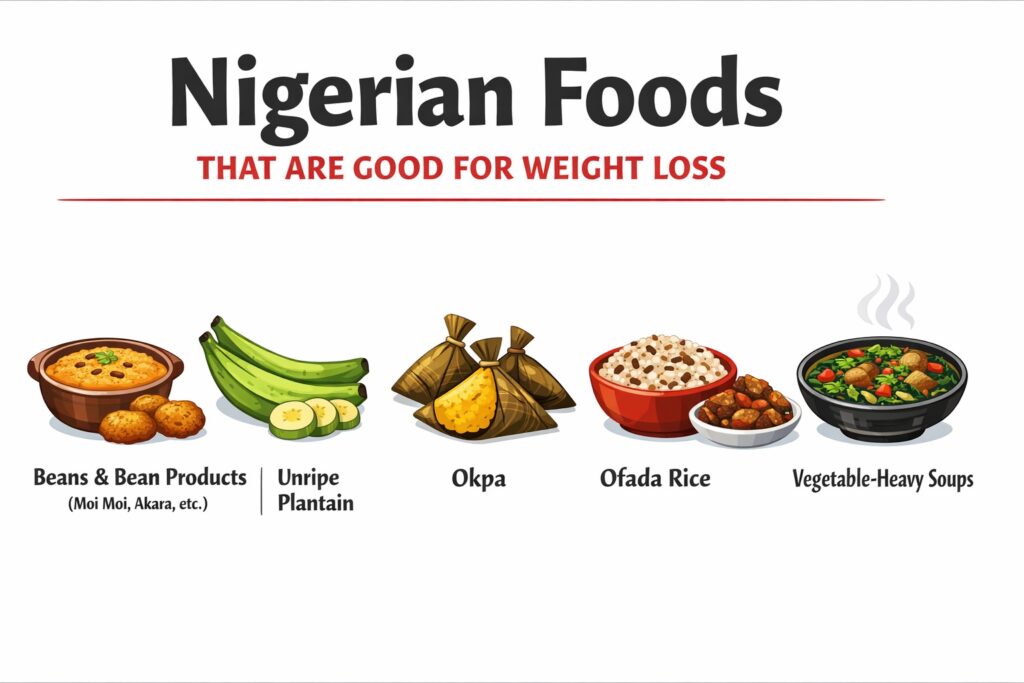
Based on my experience, these are the top Nigeria foods to consider if you’re trying to shed fat:
1. Beans and Bean Products

Nigerian food for weight loss doesn’t get better than beans. It has a low glycemic index (moi moi scores 41, one of the lowest of any Nigerian food tested), it’s high in protein and fiber, and research shows it keeps you full for longer than rice or yam. Beans also undergo fermentation when soaked, which adds probiotic benefits.
Best forms for weight loss: Moi moi (steamed — GI of 41), beans porridge with one tablespoon of palm oil, beans and boiled unripe plantain. Worst form: akara every day (fried).
2. Unripe Plantain
I consider unripe plantain as one of the most underrated weight-loss foods in Nigeria. It has a significantly lower glycemic index than ripe plantain because its starch is still undigested. As such, the food functions almost like dietary fibre, slowing digestion and keeping you full. Unripe plantain is also high in resistant starch, which feeds the good bacteria in your gut.
Best forms: Boiled, roasted (bole), or porridge. The riper the plantain, the higher its sugar content and GI. Fried ripe dodo every day is not a weight-loss food.
3. Okpa (Bambara Nut)
Okpa is one of the most complete, high-protein Nigerian foods, yet almost nobody talks about it in weight-loss content. It’s common in the southeast and south-south, and it’s made from Bambara groundnut, a legume.
Research from Nigerian universities has confirmed that Bambara nut diets reduced oxidative stress in diabetic rats. For weight loss, it’s filling, high in protein, and relatively low in calories.
You can find Okpa as street food in states like Enugu, Anambra, and Delta. If you’re not from these regions and haven’t tried okpa, I recommend it. Two wraps for breakfast and you won’t be hungry until midday.
4. Ofada Rice and Brown Rice
Regular white rice is high-GI, so it raises blood sugar quickly and leaves you hungry sooner. Meanwhile, ofada rice has a lower GI and contains more fibre and nutrients. It was tested in Nigerian food studies and falls into the low-to-moderate GI category.
If you eat rice daily, I suggest switching to ofada or brown rice. Also, reducing the portion by about a third will make a real difference over time.
5. Vegetable-Heavy Soups
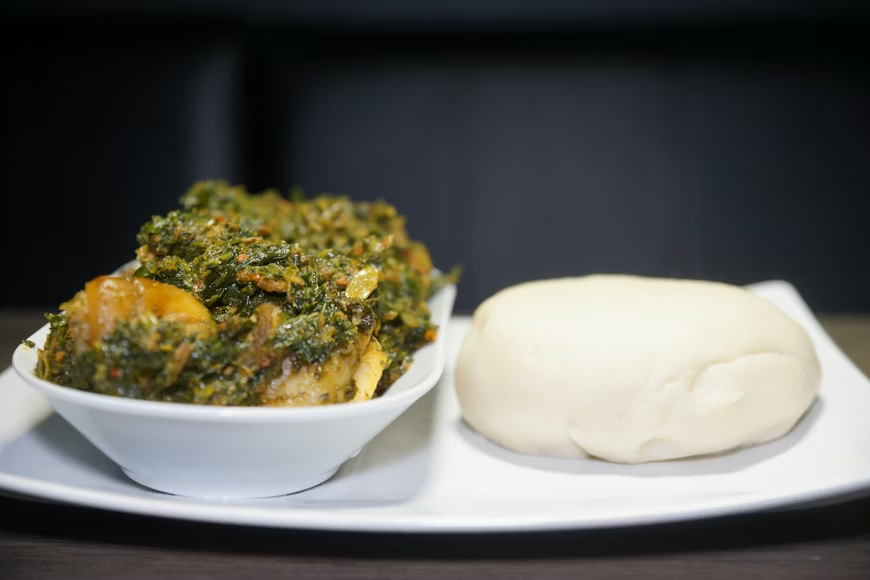
I’ve seen lots of people asking which Nigerian soup is good for weight loss. This is where it gets interesting because soup itself is rarely the problem. Instead, it’s about how you cook it.
The best soups for weight loss are the ones that are vegetable-heavy and made with less oil. Notable mentions are:
- Pepper soup
- Efo riro
- Edikaikong
- Okra
- Ofe Nsala
The problem soups are the ones cooked with heavy palm oil.
Nigerian Foods to Reduce or Avoid for Weight Loss
The Nigerian foods to avoid for weight loss often surprise people, as some are everyday stuff. Here’s my quick list to guide you:
- Semovita and semolina: These have the highest glycemic index of all Nigerian swallows, over 80. They digest fast, spike blood sugar hard, and leave you hungry quickly. If you are trying to lose weight, swap to amala or a smaller portion of fufu.
- Agege bread every morning: White refined flour, high GI, very little fibre or protein. You will be hungry again within two hours. Pair with eggs if you must eat it, or switch to oats.
- Heavily oiled egusi and palm oil soups: Learn to cook these soups with less oil. One tablespoon per pot is enough for colour and flavour.
- Malt drinks and soft drinks: One bottle of Malta Guinness has the carbohydrate equivalent of a cup of white rice. Most Nigerians drink these without counting them as food. They’re food, and they’re very high in sugar.
- Fried yam and fried plantain daily: Yam and plantain are not bad foods. Frying them in a lot of oil is what makes them problematic for weight loss. Boiled or roasted versions of the same foods are significantly lower in calories.
- Very large portions of swallow: The food is not always the problem. A ball of eba the size of your head with a full bowl of egusi is not a weight loss meal, regardless of how good the ingredients are individually.
My Final Thoughts
Picking the best Nigerian food for weight loss isn’t about abandoning your culture or eating lettuce every day. It’s about knowing which of the foods you already eat are working for you, cooking them properly, and reducing the portion sizes of the ones that are not.
You can eat moi moi, beans, unripe plantain, okpa, ofada rice, crayfish, garden eggs, ewedu soup, and fermented condiments like iru and ogiri. These are all traditional Nigerian foods with solid nutritional profiles that support weight loss. They’re not exotic, and you can find them in your local market.
My takeaway is to stop blaming the food. Start looking at how you cook it and how much you put on your plate.