


I want to be straightforward about something before we go any further: eating 1,000 calories a day isn’t what I recommend as a long-term lifestyle. I did it. It worked for me, for a specific period, for a specific reason. But I also made mistakes during that time that I’m going to tell you about honestly, because most articles on this topic give you the meal plan without the reality check.
Let me tell you how it started. I had about 12kg to lose. I was already eating relatively well, but the scale was not moving. A trainer I trusted told me that sometimes you need to create a sharp deficit for a few weeks to break through, then go back to a normal calorie intake. He said 1,000 to 1,200 calories for 4 to 6 weeks, not permanently. That framing matters.
I live in Calabar, and I can’t afford to buy imported diet food or supplements every week. Everything I eat is Nigerian food from my local market. So the question I had to answer was: how do you eat 1,000 calories a day in Nigeria without losing your mind or your muscle?
This is what I figured out.
What Does 1,000 Calories Actually Mean?
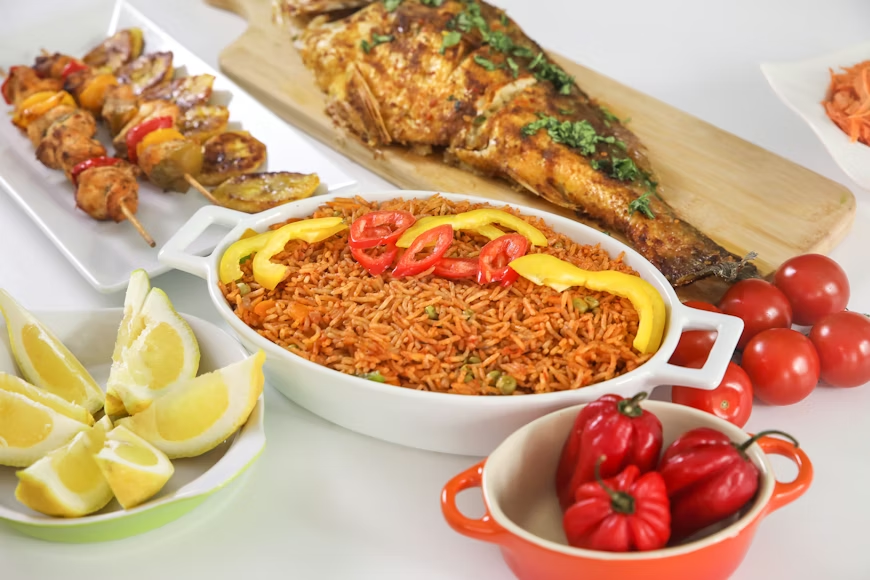
The average Nigerian adult burns between 1,600 and 2,200 calories per day just by existing. I’m talking about breathing, digesting food, and keeping the heart beating. So, if you’re active, that number goes higher.
When I eat 1,000 calories, I’m creating a deficit of at least 600 calories every day. Over a week, that’s 4,200 calories, meaning roughly 0.5 to 0.6 kg of fat.
That’s the math. But here’s what the science adds to it, and this is the part that changed how I approached everything.
Research on very low-calorie diets shows something called metabolic adaptation. When you cut calories sharply, your body responds by slowing down. Your resting metabolic rate drops; not just because you weigh less, but because your body becomes more efficient at using less energy. This is your body protecting itself.
A 2022 study found that calorie restriction alone can reduce total daily energy output by around 256 calories per day within 8 weeks. Your body essentially lowers the thermostat.
This is why people who eat 1,000 calories for months stop losing weight. The deficit closes itself. It’s also why I was told 4-6 weeks maximum, not as a permanent eating style.
| ⚠️ Who should NOT eat 1,000 calories a day: – Pregnant or breastfeeding women. – People with diabetes, thyroid conditions, or heart problems. – Anyone under 18 – People who train intensely because your muscles need fuel to recover. – Anyone with a history of disordered eating. If any of the above apply to you, a 1,200 to 1,500-calorie approach is safer and more sustainable. |
The Nigerian Problem with Low-Calorie Eating
When I first tried to eat 1,000 calories a day, I failed the first three attempts. Not because I lacked willpower, but because of three very Nigerian-specific problems that nobody writes about:
Problem 1: Nigerian food portions are designed for hunger, not calorie counting
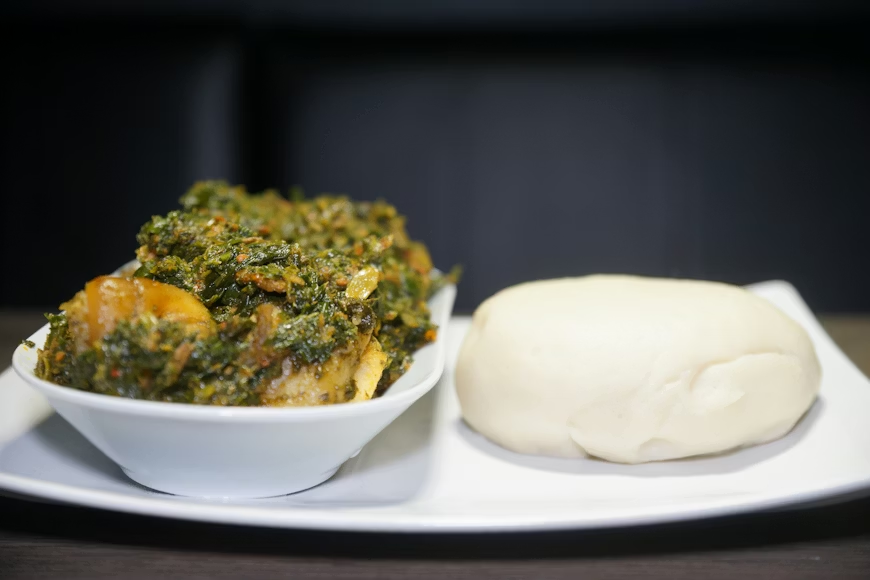
The way Nigerian food is served is designed to fill a person who has been working all day physically. Most of our food portion norms come from a culture of real physical labour by our forefathers.
However, we’re no longer largely farming or building. Most of us just sit in an office. But our body expects those portions because that’s what we grew up eating. The first thing I had to change was not the food itself, but my relationship with serving size.
Problem 2: Nigerian social eating culture makes low-calorie eating conspicuous
In Nigeria, not finishing your food is rude, and refusing food at a gathering is suspicious. When you go to a function and put a small amount on your plate, somebody will say something. If you refuse the jollof rice at a wedding, your auntie will ask if you’re sick.
I learned to navigate this. At social events, I ate small portions of everything and did not explain myself. At home, I was strict. The 80/20 approach kept me in check (80% controlled eating, 20% allowance for social occasions).
Problem 3: Hunger hits in the Nigerian heat differently
Lagos heat isn’t a joke. When your body is warm, and you’re not eating enough, tiredness hits faster, and hunger is more aggressive.
I started drinking significantly more water (sometimes 3 litres per day), and I noticed that a lot of what I thought was hunger in the afternoon was actually dehydration. Water is free and has zero calories, so it became one of my main go-to drinks.
How I Built My 1,000-Calorie Nigerian Day
Here’s my actual approach. These are not perfect days: some days I hit 1,050 or 1,100, and that was fine. The goal was to stay under 1,200 consistently, not to hit exactly 1,000 every single day.
The key principle: I built every meal around protein first, then vegetables, then a small amount of carbohydrate. Protein keeps you full longer than carbs or fat per calorie. Besides, Nigerian protein sources are cheap, including eggs, beans, fish, and sardines. I leaned on all of them.
| BREAKFAST 6:30 am ~320 calories |
| 2 boiled eggs + half cup of plain oats cooked in water + 1 orangeThe eggs and oats keep me full until 11 pm most days. I don’t add sugar to the oats. Instead, I add a small banana slice if I’m very hungry. I eat the orange last, so the fibre from it slows down digestion. |
| LUNCH1:00 pm ~310 calories |
| 1 medium wrap of moi moi + ewedu soup + 1 small piece of grilled fish (100g)This is my biggest meal. Moi-moi has a glycemic index of 41, making it one of the lowest of any Nigerian food tested. Combined with ewedu (which is mostly water and fibre) and grilled fish, this is filling for its calorie count. I cook my moi moi without the full seasoning cube. Just pepper, onion, crayfish, and a small amount of palm oil inside the moi moi itself. |
| AFTERNOON SNACK 4:30 pm ~160 calories |
| Garden eggs (4 medium) + 1 handful groundnuts (15g)This is the meal that saves me from running to the kitchen at night. Garden eggs are extremely low-calorie, but they fill the stomach. The groundnuts add protein and healthy fat. I eat them slowly. Total time: about 20 minutes of eating. |
| DINNER 7:30 pm ~210 calories |
| Pepper soup (catfish or chicken) 1 medium bowl, no swallowPepper soup is one of the lowest-calorie meals in Nigerian cuisine. A bowl of catfish pepper soup is mostly water, spices, and fish. The spices, such as uziza, ehuru, uda, and utazi, are all effectively zero calories. I eat dinner early enough that I’m not going to bed immediately full or immediately hungry. |
| Daily total: ~1,000 calories | Protein: ~70–80g | Water: 3 litres minimumThis is one version of the day. I rotated through variations, like replacing moi moi with a small plate of beans, or replacing the pepper soup with okra soup and a tiny ball of amala. The calories stayed roughly the same because the principle didn’t change. Protein at every meal, water before eating, and vegetables to fill the gaps. |
The Foods That Made This Possible
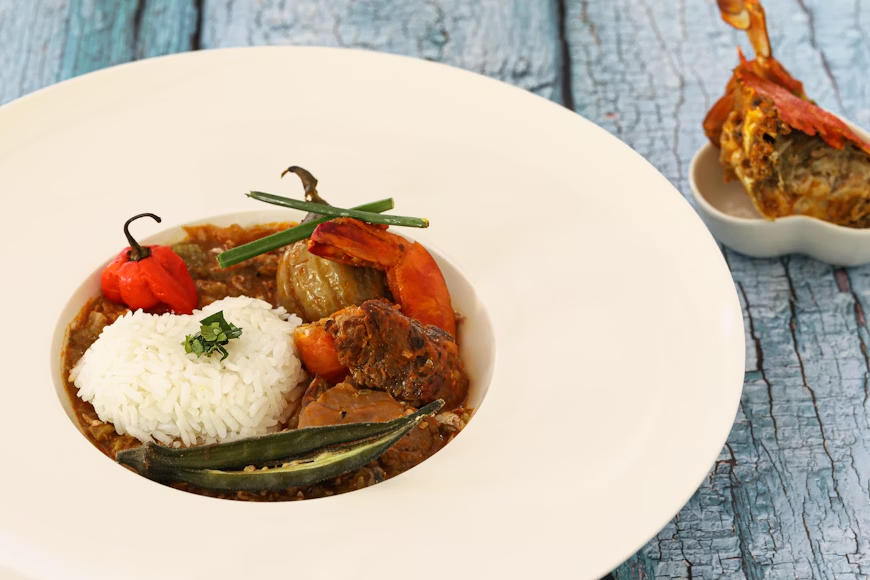
Not all Nigerian foods are equal at 1,000 calories. The foods that made this work for me were the ones that gave me the most volume and protein per calorie. Here’s what I relied on:
- Pepper soup: Catfish pepper soup, chicken pepper soup. A full bowl is roughly 150 to 200 calories. It is filling, it is hot, and the spices suppress appetite slightly. I ate it almost every evening.
- Moi moi: GI of 41, high in plant protein, no extra oil absorbed in cooking. Two wraps are about 250 to 300 calories,s depending on size and what is inside. It is the most calorie-efficient filling Nigerian meal I know.
- Garden eggs: 100g of garden eggs has about 24 calories. I ate them as a snack, raw, with a small amount of groundnut or garden egg sauce made with minimal oil.
- Ewedu soup: Half a cup of ewedu with crayfish is about 30 to 50 calories. It is mostly water and mucilaginous fibre. Paired with a small ball of amala (100g = 100 calories), the whole meal is under 200 calories and very filling.
- Boiled eggs: 6 grams of protein per egg, 77 calories. The most cost-effective protein I know in Nigeria.
- Sardines and canned tuna: One can of sardines is about 170 to 200 calories with 20+ grams of protein. On days when I was pressed for time, sardines saved me.
- Unripe plantain: A small unripe plantain, boiled, is about 80 to 100 calories and keeps you full for hours due to its resistant starch content. I used this instead of swallowing on some days.
- Oats: Half a cup of dry oats cooked in water is about 150 calories. High in fibre, it keeps you full. I ate this every morning.
What I Got Wrong (So You Don’t Have To)
I made three mistakes that I want to be honest about:
Mistake 1: I did not eat enough protein in the first two weeks
In the first two weeks, I was eating 1,000 calories but not tracking protein. I was losing weight quickly, but I was also losing muscle, so I felt weak. My arms started looking thinner in a way that was not satisfying.
When I deliberately increased protein to 70 to 80g per day (within the same 1,000 calories), the muscle loss slowed, and my energy came back.
The lesson: At 1,000 calories, every calorie must work hard. Prioritise protein such as eggs, fish, moi moi, beans at every meal. Don’t waste your calorie budget on things that don’t fill you or protect your muscles.
Mistake 2: I went straight from 1,000 calories back to normal eating
After six weeks, I went back to eating normally, and I mean normally for a Nigerian social life, which is a lot of food. Within two weeks, I had regained 2 of the 5kg I had lost. Research explains why: when you restrict calories severely, your metabolism slows. When you suddenly eat more, your now-slower metabolism stores more of it as fat.
The lesson: Come off 1,000 calories gradually. Add 200 to 300 calories per week, not 800 in one day. Give your body time to adjust. I did not know this the first time.
Mistake 3: I skipped breakfast on some days, thinking it would speed things up
It did not. On the days I skipped breakfast, I was so hungry by afternoon that I ate more at lunch and dinner than I should have. My total daily calories were sometimes higher on the days I skipped breakfast than on the days I ate all three meals.
This matches what research shows: skipping meals on a low-calorie diet increases hunger hormones (ghrelin) and reduces satiety hormones (leptin), making it harder to stay within your target.
The lesson: Don’t skip meals when you’re already eating very little. Distribute the 1,000 calories across the full day.
The One Thing That Made the Biggest Difference

More than any specific food or meal timing, the single thing that made 1,000 calories feel manageable in Nigeria was eating very slowly and drinking water before every meal.
Before breakfast, I drank a full glass of water. Then, before lunch, another glass. And, before dinner, another. It sounds simple, and it is.
Research consistently shows that drinking water before meals reduces the amount of food you eat at that meal by dropping your appetite. In Nigeria, where we often eat quickly and in social settings, slowing down deliberately is unusual. But it works.
My Final Word
Eating 1,000 calories a day in Nigeria is possible without buying imported food or starving yourself on vegetables. But it’s a tool, not a lifestyle. I used it for six weeks, lost 5kg, then transitioned to 1,400 calories, where I have maintained ever since.
Use it carefully: 4 to 6 weeks maximum. High protein, low GI Nigerian foods. Water before every meal. Come off it gradually. And if you’re training in a gym, don’t try to lift heavy while on 1,000 calories because your body doesn’t have enough fuel for both fat loss and strength training at this level.