


I tried intermittent fasting in Nigeria for the first time on a Thursday morning. Living in Port Harcourt, I’d stayed up too late reading about it, set my alarm for 6 AM, and told myself I’d start with the 16:8 method. That’s eating only between noon and 8 PM, and fasting the other 16 hours.
By 9 AM, I was standing at a bole spot on Aba Road, wondering if I could justify breaking the fast with one stick. I couldn’t. I went back home, drank water, and sat through the discomfort.
After months of seeing results, I’m here to tell you about how intermittent fasting works specifically in Nigeria, with the food we eat here.
What Intermittent Fasting Actually Does to Your Body
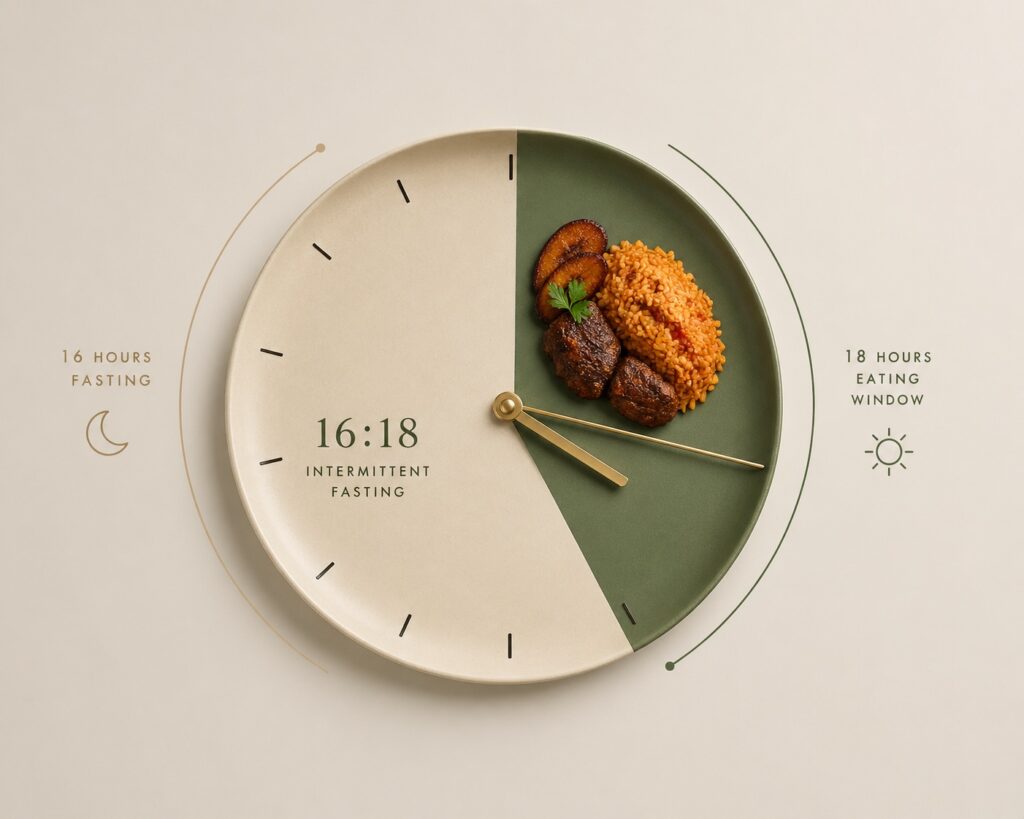
Before I get into meal plans and market runs, let me explain what’s actually happening during a fast. Once you understand the mechanism behind this weight loss tool, hunger stops feeling pointless.
When you eat, your pancreas releases insulin. Insulin’s job is to move glucose from your blood into your cells for energy, and to store any excess as fat. While insulin is high, your body cannot access fat stores. You can only burn fat when it’s low, and insulin only falls when you’re not eating.
That’s the main reason why intermittent fasting works. It’s not just about eating less. It’s about creating a sustained window where insulin drops low enough for your body to begin pulling energy from stored fat.
A 2024 umbrella review of randomised controlled trials found evidence that intermittent fasting reduces:
- Fat mass
- Waist circumference
- LDL cholesterol
- Fasting insulin
Fat burning doesn’t happen when you eat; instead, it happens in the hours between meals.
Another thing that occurs during fasting is the metabolic switch. After roughly 12 to 16 hours without food, your liver runs low on glycogen (stored glucose) and begins converting fatty acids into ketone bodies.
These ketones fuel your brain and muscles. That’s why you may experience unusual mental clarity during a fast. It’s because your brain is running on a different, cleaner fuel source.
| In plain terms: Every hour you fast beyond 12 hours, you’re deepening the insulin dip and extending the fat-burning window. The 16-hour fast doesn’t mean 16 hours of discomfort. By hour 14 or 15, most people aren’t hungry at all. The hunger peaks around hours 6 to 10 and then settles. |
Why It Works Specifically for Nigerians
Intermittent fasting in Nigeria suits the way most of us already eat, and this is something I genuinely didn’t expect to discover. Here are the reasons:
1. Most people don’t eat before leaving the house
Think about the typical morning. You wake up, get ready, fight traffic, and by the time you’re settled at work, it’s already 9 or 10 AM. You’ve already been fasting for 12 to 14 hours from the night before.
So, intermittent fasting doesn’t ask you to do something radically different. It only asks you to extend the existing natural fast by 2 to 4 hours. For someone who already skips breakfast, going from noon to 8 PM for eating won’t be a big shift. It’s a small extension of a pattern that’s already there.
2. Nigerian culture
We already have a tradition of eating two main meals a day: lunch and dinner. Breakfast is often just tea or pap or nothing at all.
The IF structure of one large meal and one moderate meal within an 8-hour window comfortably fits how most Nigerians already eat. You won’t have to buy unfamiliar food or follow an imported meal plan.
The Method I Use: 16:8
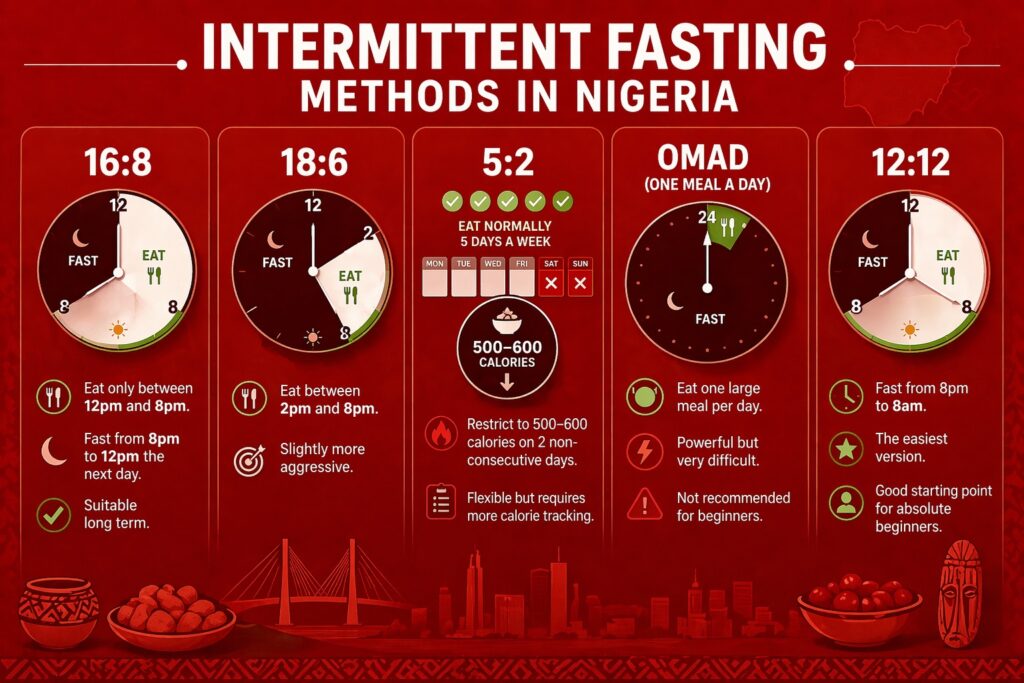
There are several intermittent fasting methods, each with its pros and cons. I tried a few and settled on 16:8 because it fits a working day without requiring extraordinary willpower. Here’s how:
| Intermittent Fasting Methods Explained | |
| 16:8 (What I do) | Eat only between 12 PM and 8 PM, fast from 8 PM to 12 PM the next day. The 16-hour fast includes sleep time, so it’s sustainable in the long term. |
| 18:6 | Eat between 2 PM and 8 PM. This is slightly more challenging, but it’s good for faster results. |
| 5:2 | Eat normally 5 days a week. Restrict to 500–600 calories on 2 non-consecutive days. It’s flexible but requires more calorie tracking. |
| OMAD (One Meal a Day) | Eat one large meal per day. This option is powerful but very difficult and not recommended for beginners. |
| 12:12 | Fast from 8 PM to 8 AM. It’s the easiest version, and a good starting point if you’re new. |
My recommendation for anyone starting in Nigeria is to begin with 12:12 for one week. Then, move to 14:10, then 16:8. Don’t jump straight to 16:8 on day one, even if you want to lose belly fat fast.
Your body needs time to adjust its hunger hormone (ghrelin) schedule. So, give it two to three weeks, and the morning hunger will reduce significantly.
My Intermittent Fasting Day — What It Actually Looks Like
I live in PH, and I work from home three days a week. This gives me some control over my environment, and here’s a realistic picture of how I structure my IF days.
The Fasting Window: 8 PM to 12 PM
The fast starts after my last meal at night, usually around 7:30 to 8 PM. I stopped eating. The hardest part for me is from 9 AM to 11 AM. By then, I’ve been awake for two to three hours, and the morning habits kick in.
What breaks a fast:
Anything Nigerian drinks with calories, including:
- Fruit juice
- Milk in tea
- Sugar in anything
What doesn’t break fast:
- Water
- Black tea with nothing in it
- Black coffee with nothing in it
- Unsweetened zobo water
I drink water constantly from 6 AM onwards. Sometimes, I also drink black tea: the affordable Lipton yellow label works perfectly.
Breaking the Fast: 12 PM
The first meal is the most important one to get right. I don’t break my fast with garri and egusi, and I certainly don’t go for Indomie. Instead, I break it with something that gives my body protein and fibre before carbohydrates.
| FIRST MEAL — 12 PM (Breaking the fast) |
| 2 boiled eggs + 1 medium wrap of moi moi + 1 large glass of water + fresh pawpaw or watermelon |
Breaking the fast with protein first prevents the blood sugar spike that can occur when you eat carbs on an empty stomach. When you eat carbs after a 16-hour fast, insulin increases sharply. But if you eat protein first, the response is more gradual, and you stay full longer.
Main Meal: 3 PM to 4 PM
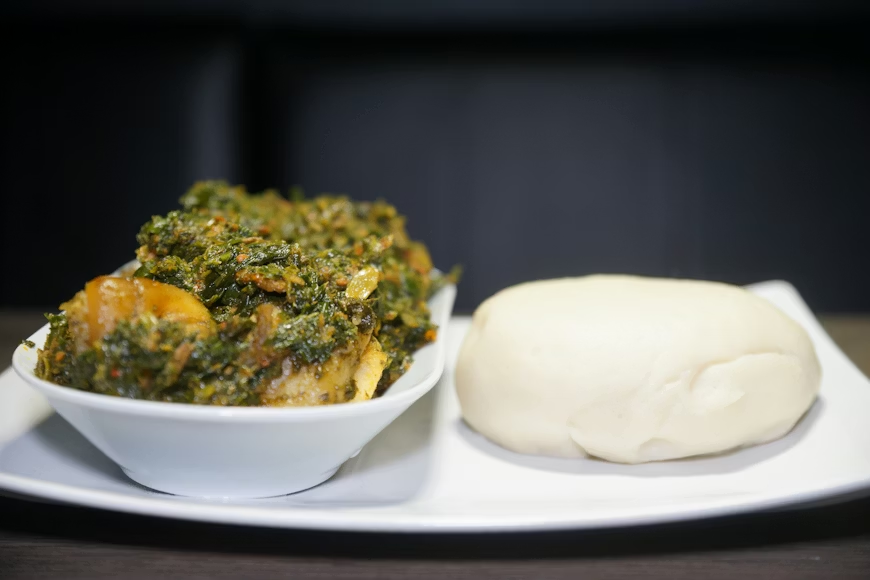
This is my biggest meal of the day, and I don’t restrict myself here. I eat proper Nigerian food like garri and soup to get my energy back.
| MAIN MEAL — 3:30 PM |
| Catfish pepper soup or a small portion of ofada rice with efo riro OR banga soup with a small ball of starch |
The key thing I watch here is oil. I cook my soups with 1 tablespoon of palm oil instead of the traditional 1/2 cup. The flavour is there, but the calorie load is a fraction of what it would be.
Evening Snack or Light Meal: 7 PM
I close the window at 8 PM, so by 7 PM I have my last intake. This is usually light, like garden eggs with groundnuts or just fruit.
| EVENING — 7 PM |
| 4 garden eggs + small handful of groundnuts OR a cup of tiger nut milk (kunu aya) OR ginger-zobo |
Who Should Be Careful With Intermittent Fasting
Intermittent fasting isn’t for everyone, and I want to be direct about this. You shouldn’t do it if you’re a:
- Pregnant or breastfeeding woman: Your nutritional needs are too high for an eating restriction window.
- A person with diabetes who is on insulin or blood sugar medications: Fasting changes your glucose levels significantly and requires medical supervision.
- Have a history of disordered eating: Restriction triggers are real, and IF can worsen them.
- Child or teenager: it’s just not appropriate.
My Final Word
Intermittent fasting in Nigeria is one of the most useful weight loss methods I’ve used. Not because it’s magical, but because it works with the way we already eat.
In this country, we’re not breakfast people. We eat two main meals, and we know how to wait. The structure of IF fits us better than calorie counting ever will. It requires being honest with yourself about the fasting window and what breaks it.
The Nigerian social environment can make it difficult at times, and you may deal with it imperfectly. That’s fine. What matters is maintaining the pattern over weeks and months. You won’t be perfect every single day.
FAQs about Intermittent Fasting in Nigeria
How to do intermittent fasting in Nigeria?
You can do intermittent fasting in Nigeria by picking a suitable daily plan. I recommend 12:12 for one week, then 14:10, and finally 16:8.
Does fasting from 7 PM to 7 AM work?
Yes, intermittent fasting from 7 PM to 7 AM can work. It’s a 12:12 fasting structure that’s good for when starting.
Who should not do intermittent fasting?
You shouldn’t do intermittent fasting if you’re a pregnant or breastfeeding woman. Also, avoid it if you have diabetes, with insulin or blood sugar medications, or an eating disorder. Intermittent fasting is not for children or teenagers.