


Can you eat rice when trying to lose weight? We get that question a lot, and you probably have the same in mind right now. Hang on, as we’ll give you the facts.
In Nigeria, we enjoy rice in several forms, including jollof, fried rice, white rice, stew, and more. So, telling people to stop eating rice entirely won’t work. And, to be honest, it’s not necessary.
If you’re on a weight loss journey, you can still progress if you choose to eat rice. What matters is how much you’re eating, the type of rice, and what you are pairing it with. Get those three things right, and you won’t have any problems.
Why Rice Is Not the Enemy

Rice is blamed for weight gain in Nigeria, the same way garri is. However, rice itself isn’t a food that makes people fat. It’s just a solid source of carbohydrates, which your body needs for energy.
Problems only arise with the way most of us eat rice, including:
- Large portions: A typical Nigerian plate of rice is 300 to 400g of cooked rice, which is 390 to 520 calories. That’s before the stew, chicken, or plantain arrives.
- Very oily stews: One tablespoon of vegetable oil has 120 calories. Nigerian stews commonly use 4 to 8 tablespoons per pot. As such, your rice gets soaked in it before it reaches your plate.
- Little protein or fibre on the side: A plate of rice with just stew and fried chicken is high in calories but low in fibre and protein, which help control hunger.
- Eating rice twice a day: Rice for lunch and rice for dinner is common in many Nigerian homes. It doubles the daily calorie intake from a single food source.
Of course, we can’t blame rice for any of the above. They’re habits that can change without removing rice from your plate completely.
How Many Calories Are in Rice?
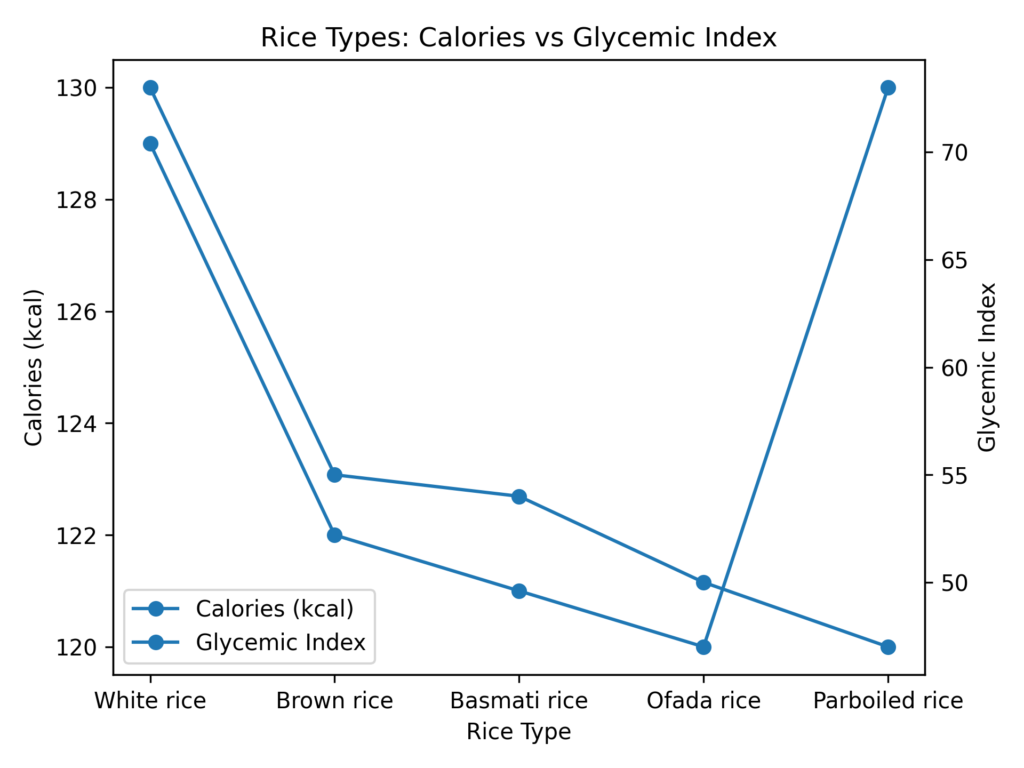
Before making any decisions, it helps to know the numbers. So, let’s see how the main types of rice compare per 100g of cooked rice:
| Rice Type | Cal/100g (cooked) | GI Score | Fibre | Best For |
| White rice | 129 kcal | 73 (High) | 0.4g | Quick energy |
| Brown rice | 122 kcal | 55 (Medium) | 1.8g | Fibre, weight loss |
| Basmati rice | 121 kcal | 50–58 (Medium) | 0.4g | Lower GI, weight loss |
| Ofada rice | ~120 kcal | ~50 (Medium) | ~2g | Best local option |
| Parboiled rice | ~130 kcal | 47 (Low–Med) | 0.7g | Good compromise |
You can see that the calorie differences between rice types are small. The glycemic index (GI) and fibre content matter most, because a high GI means the food raises blood sugar quickly. That leads to faster hunger and more eating.
White rice has a high GI of 73. Basmati sits at 50-58, which is medium. Ofada rice, Nigeria’s local unpolished variety, is similarly low to medium in glycemic index, making it one of the best choices for weight loss.
White Rice for Weight Loss: What You Need to Know
Without question, white rice is the most commonly eaten rice in Nigeria. Jollof, fried rice, and plain rice with stew are all made with white rice. And, as you saw in the table above, it has a high glycemic index of 73.
High GI can cause blood sugar spikes after eating it. The spike triggers an insulin response, and when the blood sugar is back down, you feel hungry again. That cycle is one of the main reasons white rice can contribute to weight gain when eaten in large quantities.
| Portion guide: 150g of cooked rice is roughly the size of a tennis ball. That’s a reasonable portion of weight loss. The standard Nigerian serving is usually two to three times that size. |
Basmati Rice for Weight Loss
To be frank, basmati rice is a better option than regular white rice for weight loss. The reason is that its glycemic index is significantly lower. Regular white rice has a GI of 73, while basmati rice has a GI of 50-58, which is classified as medium.
Basmati also contains a higher proportion of amylose. Forget the grammar: it’s just a type of resistant starch that digests slowly. This supports better gut health and keeps you satisfied for longer between meals, naturally reducing how much you eat.
Ofada Rice: Best Local Option in Nigeria
We want to give Ofada rice the attention it deserves. Ofada is an unpolished, locally grown rice variety from Ogun State that keeps its bran layer. That layer holds most of the fibre and nutrients. Removing it strips away the things that make rice more filling and nutritious.
Ofada has a lower glycemic index than white rice and more fibre. Therefore, it keeps you fuller longer and causes fewer blood sugar spikes. We know the strong smell puts some people off, but if you’re serious about weight loss, eating Ofada rice is an upgrade.
How to Eat Rice for Weight Loss: Practical Rules
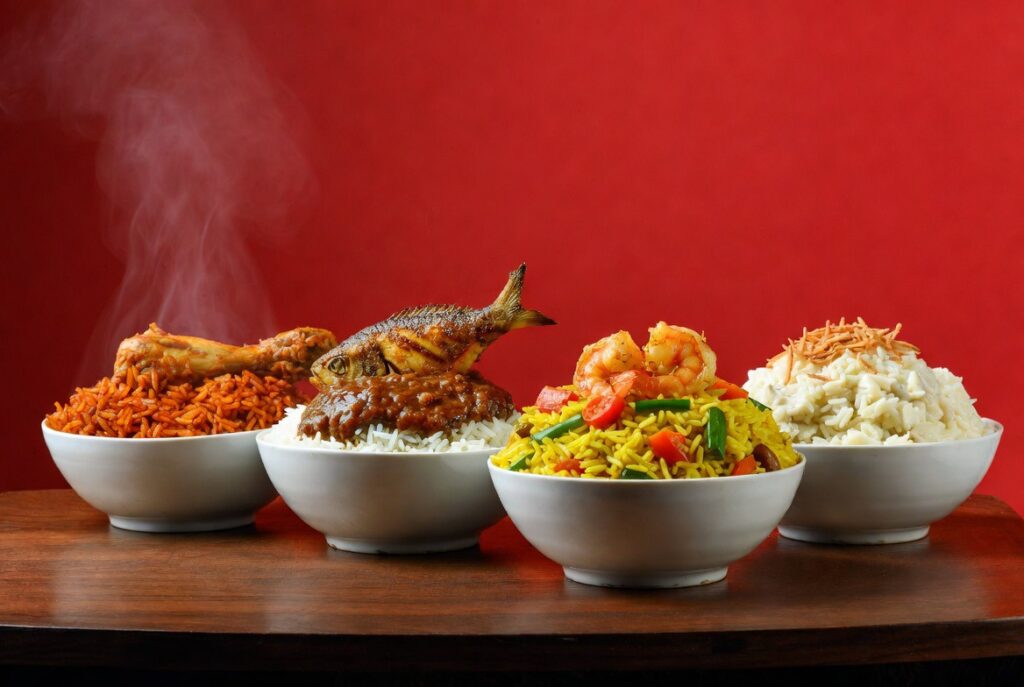
Can I eat rice for weight loss? Yes, you can if you consistently follow a few simple rules. Here’s our practical guideline:
1. Control the Portion First
This is the single most important change you can make. Measure your cooked rice before dishing it out, and aim for 150 to 200g. A full cup of cooked rice is about 180-200g. Anything beyond that is extra calories that your body will store as fat if you are not burning them.
2. Always Pair Rice with Protein
Rice alone, or rice with just stew, leaves you hungry within a few hours. That’s because the meal is mostly carbohydrates with little protein. So, adding grilled chicken, fish, eggs, or beans significantly slows digestion. It also reduces how much rice you need to eat to feel satisfied.
3. Add Vegetables to Every Rice Meal
Vegetables add fibre and bulk without a high calorie count. Examples include coleslaw without mayonnaise, stir-fried mixed vegetables, a fresh tomato-and-cucumber side, or any Nigerian leafy green dish. Eat it alongside rice, and your meal becomes more filling with fewer extra calories.
4. Cut the Oil in Your Stew
We cannot stress this enough. In most cases, the oil in Nigerian stew adds more calories to a rice meal than the rice itself. Reducing the oil in your stew recipe by half immediately cuts the calorie density in half. Meanwhile, the flavour barely changes.
5. Eat Rice at Lunch, Not Dinner
Your body burns more calories when it’s active. For this reason, we recommend eating your rice meal at lunchtime, when you still have hours ahead before sleeping. That way, you have time to use those carbohydrates for energy. Eating a large rice meal at 9 PM, when you’re about to sleep, means most of those calories won’t get burned.
Rice Weight Loss Meal Plan: What a Good Plate Looks Like
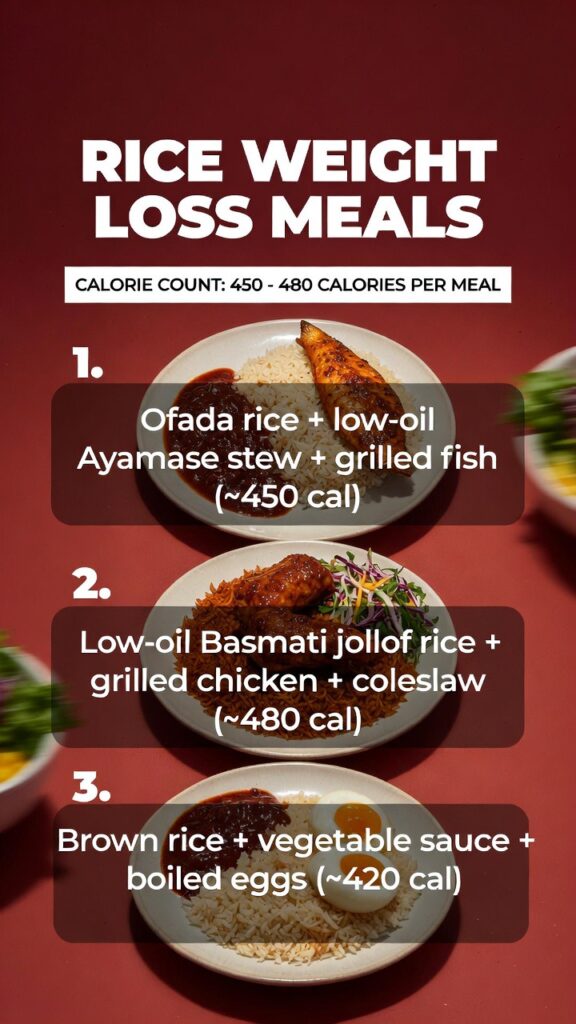
Your rice meal plan for weight loss doesn’t have to be boring or foreign. Here are three Nigerian rice meals that work well for weight loss:
- Ofada rice + Ayamase (low oil) + grilled fish: Use half the usual oil in the ayamase, add more assorted vegetables, and serve with a medium portion of Ofada. Under 500 calories if done right.
- Basmati jollof rice (low oil) + grilled chicken + coleslaw: Make your jollof with basmati and 2 tablespoons of oil instead of the usual quantity. Add grilled chicken and fresh coleslaw.
- Brown rice + vegetable sauce + boiled eggs. Cook brown rice, prepare a tomato-and-pepper vegetable sauce with minimal oil, and add two boiled eggs for protein.
Rice Water for Weight Loss: Does It Actually Work?
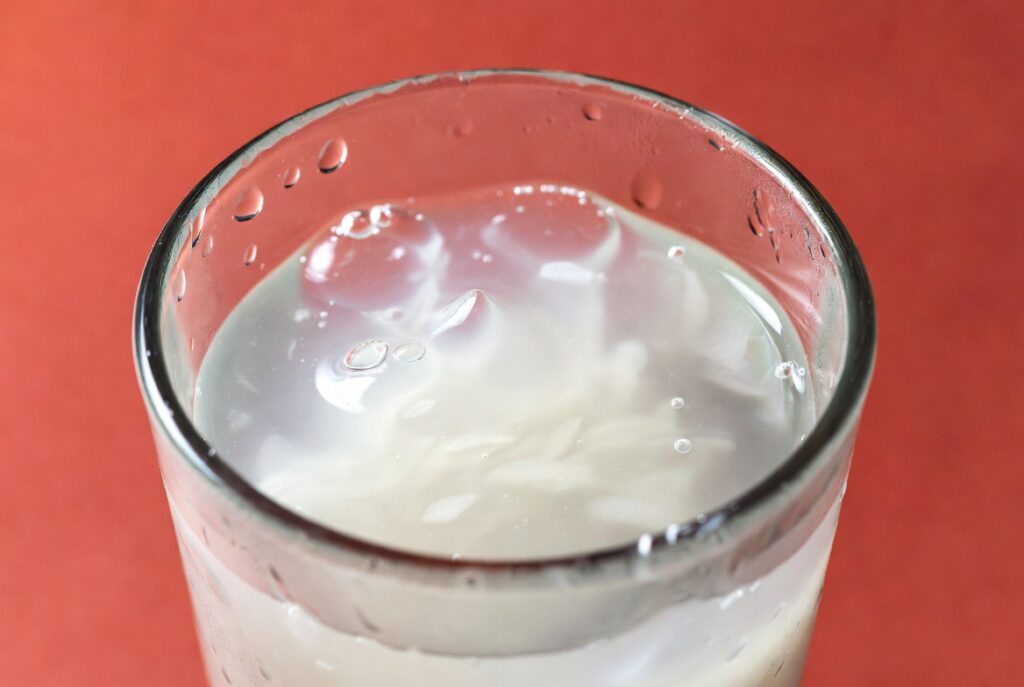
Using rice water for weight loss has been trending on Nigerian TikTok and Instagram for a while. The claim is that drinking the water left over after rinsing or cooking rice supports weight loss, among other things. We did some research, and here’s what the evidence says:
Rice water contains small amounts of resistant starch, vitamins, and minerals, and it may support digestion and gut health. However, there is no strong scientific evidence that drinking rice water directly causes weight loss.
If you want to try it anyway, here’s what to do:
- Rinse raw rice in water
- Soak it for 30 minutes
- Drink the water.
There’s no harm in it, and it’s essentially calorie-free. But don’t expect it to substitute for the actual eating changes that produce results.
Conclusion – You Can Eat Rice When Trying to Lose Weight
Rice isn’t the enemy of weight loss in Nigeria. The issue is the portion, oil, and the habit of eating rice twice a day. Change those things, and rice becomes a perfectly reasonable part of a fat-burning diet.
It doesn’t matter if you choose basmati rice for weight loss, Ofada, brown rice, or even regular white rice. Just eat it in controlled portions and track your total daily calorie intake. That’s the simple, realistic guide to enjoying rice without it getting in the way of your goals.
Rice for Weight Loss FAQs
What is the best rice for weight loss?
Ofada rice is the best local option for weight loss in Nigeria. It’s unpolished, higher in fibre, and has a lower glycemic index than regular white rice.
Which rice is lowest in carbs?
Brown rice and basmati rice are lower in carbs than regular white rice per 100g. Cooked white rice has around 28g of carbs per 100g, while cooked basmati has about 25g.
Which rice is best for belly fat?
No single rice type will reduce belly fat on its own. Instead, you have to maintain a consistent calorie deficit and lower oil consumption to burn fat over time.
Is basmati rice healthier than white rice?
Yes, basmati rice is healthier than white rice. Basmati has a glycemic index of 50 to 58, compared to 73 for regular white rice. That lower GI means slower digestion, less blood sugar spiking, and longer-lasting fullness.
Does rice make your belly fat?
Rice alone doesn’t cause belly fat. Belly fat happens when you consistently consume more calories than you burn, regardless of where those calories come from.