


Right now, body fat is one of the most serious health problems in Nigeria. In a 2021 meta-analysis, reports confirmed that about 21 million Nigerians were overweight and 12 million were living with obesity. The numbers are even higher in 2026, especially in top cities like Lagos, Abuja, and Port Harcourt.
If you ask us, the reasons are not hard to find. Many people sit at desks all day and eat large portions of carbohydrate-heavy meals. They barely move outside except when going to or returning from work.
Now, if you add cheap processed food, stress, and poor nutritional guidance in Nigeria, it’s clear why many people add excess weight. Losing it feels like an uphill battle, but it shouldn’t be because this GymSquare guide is here to help.
We’ve put together all you need to know about how to lose weight in Nigeria. Our guide touched on foods you can find in any market and habits that fit our lifestyle. You won’t have to go on extreme diets or buy expensive supplements.
The Growing Weight Gain Problem in Nigeria
Obesity used to be a problem in wealthy Western countries, but that’s no longer true. Research from BMC Public Health found that in an urban Nigerian population in Abuja, 64% of adults were either overweight or obese.
Women are more affected than men in this. For context, obesity among women is more than double that of men in some studies. Based on our findings, these are the main causes of weight gain in Nigeria today:
- Sedentary jobs: White-collar work and long car/bus travels have replaced physical activity for millions of Nigerians living in cities. Many people sit for 8 to 10 hours a day.
- Oversized portions: A standard plate of eba, jollof rice, or beans is often two to three times what the body needs in one meal.
- Too much oil: Palm oil and vegetable oil are commonplace in Nigerian cooking. A single tablespoon of palm oil has 120 calories, yet many Nigerian soups use five to ten times that amount.
- Sugary drinks: Millions of Nigerians take soft drinks (minerals), malt, and juice daily. A single bottle of Fanta or Coke contains around 160 to 200 calories and provides no extra nutrients.
- Processed and fast food. Noodles, fried snacks, chin-chin, puff-puff, and shawarma are now everyday foods, especially among the youth in Nigeria.
We’ve taken the time to list the above problems because understanding them is the first step toward reducing weight.
How Weight Loss Actually Works
Before we get into foods and meal plans, let’s explain the basic science in plain language. Weight loss happens when you burn more calories than you eat. It’s that simple, and the process is called a calorie deficit.
If your body is unable to find enough fuel from food, it turns to stored fat for energy. With time, the stored fat reduces, and you lose weight.
Our findings show that the average adult Nigerian woman needs roughly 1,800 to 2,000 calories per day to maintain her weight. In contrast, the average adult Nigerian man requires around 2,200 to 2,500 calories.
To lose weight, you have to eat less than these numbers, or move more to burn extra calories. However, the ideal approach is to do both. That doesn’t mean you have to starve yourself.
A deficit of just 300 to 500 calories per day is enough to see good weight loss results of about 0.5 to 1 kilogram per week. That adds up to 2 to 4 kilograms per month without you doing anything extreme.
| Key principle: Losing weight isn’t about eating less of everything. It’s about eating the right foods in reasonable amounts, so your body uses stored fat for fuel. |
Which Nigerian Food Is Good for Weight Loss?
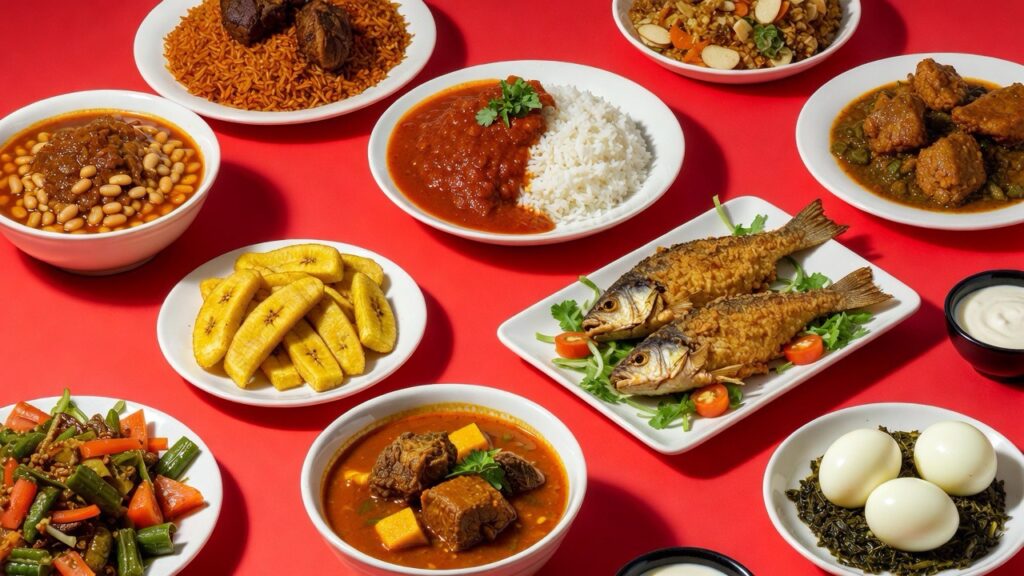
This is one of the most common questions we get, and the good news is that the answer includes many foods you already eat. The challenge isn’t in finding healthy Nigerian food. Instead, it’s preparing and using the correct portions. Here are our best Nigerian foods for weight loss:
1. Beans
We rate beans as one of the most powerful weight loss foods in Nigeria, and they’re affordable. A cup of cooked beans contains around 220 calories, but you also get protein and fibre. That combination keeps you full for hours and reduces the urge to eat between meals. Moi-moi and akara are our recommended ways to include beans in your diet.
2. Fish
You can grill, boil, or steam your fish. Either way, the food is one of the best sources of lean protein in Nigeria. Mackerel, tilapia, and catfish are widely available in markets, and they don’t cost too much. You only add extra calories if you fry the fish, due to the groundnut oil.
3. Vegetables
Here, we’re talking about the likes of ugwu, efo, waterleaf, afang, and others. These vegetables are low in calories but high in fibre, vitamins, and minerals. To illustrate, a full cup of chopped ugwu has only about 14 calories. Load your soups with vegetables and reduce the carbohydrate side (garri/fufu), and you’ll see results.
4. Unripe Plantain
Ripe plantain is sweet because it’s high in sugar. In contrast, unripe plantain has low sugar and high fibre, making it a better option for weight loss in Nigeria. You can make boiled or roasted unripe plantain with grilled fish if you want a balanced Nigerian meal.
5. Ofada Rice and Other Whole Grains
Most of us eat white rice, but the issue is that it has a high glycemic index and provides mostly empty calories. On the other hand, Ofada rice is a raw variety that has more fibre and nutrients. Brown rice, oats, and millet are also excellent alternatives because they digest slowly and keep you fuller for longer.
6. Pepper Soup
A good plate of pepper soup made with chicken, fish, or goat meat is naturally low in calories compared to most Nigerian dishes. The reason is that it has more water content with minimal oil. While eating, use small portions of the carbs, whether rice, yams, or plantain.
7. Eggs
If you want an inexpensive and easy-to-prepare food for weight loss in Nigeria, try eggs. Of course, you should already know that they’re the most affordable source of protein. One egg has about 70 to 80 calories alongside protein and healthy fat. Research shows that eating eggs for breakfast reduces hunger for the rest of the day, which leads to lower overall calorie intake.
Here’s our summary of suitable Nigerian foods for weight loss:
| Food | Calories / Notes |
| Beans (1 cup cooked) | 220 cal, high protein and fibre |
| Ugwu (1 cup chopped) | 14 cal, rich in vitamins |
| Grilled mackerel (100g) | 158 cal, high protein |
| Boiled unripe plantain (100g) | 122 cal, complex carbs |
| 1 whole egg | 72 cal, protein and healthy fat |
| Pepper soup (1 bowl) | Approx. 150–250 cal depending on protein |
| Ofada rice (100g cooked) | 130 cal, more fibre than white rice |
A Sample Nigerian Weight Loss Meal Plan
A weight loss meal plan doesn’t need to be complicated or expensive. The goal is to eat filling, nutritious meals that keep you in a calorie deficit without leaving you hungry and miserable. Here’s a realistic 3-day sample plan we developed:
| Meal | What to Eat |
| Day 1 – Breakfast | Vegetable omelette (2 eggs, spinach, tomatoes) + 1 cup of zobo (no sugar) |
| Day 1 – Lunch | Small portion of ofada rice + efo riro made with grilled fish and low oil |
| Day 1 – Dinner | 1 bowl of pepper soup (catfish or chicken) |
| Day 2 – Breakfast | Oatmeal with a small banana + black tea or ginger tea |
| Day 2 – Lunch | Moi moi (2 pieces) + okra soup with grilled tilapia |
| Day 2 – Dinner | Boiled unripe plantain + vegetable sauce (low oil) |
| Day 3 – Breakfast | Akara (2 pieces, shallow-fried) + pap with no sugar |
| Day 3 – Lunch | Beans (small portion) + small piece of grilled chicken |
| Day 3 – Dinner | Light edikaikong soup with stockfish + small eba (150g max) |
Snacks between meals should be light: a handful of groundnuts, a fruit, or a boiled egg. Avoid noodles, pastries, sugary drinks, and fried snacks during weekdays if you can.
Weight Loss and Belly Fat
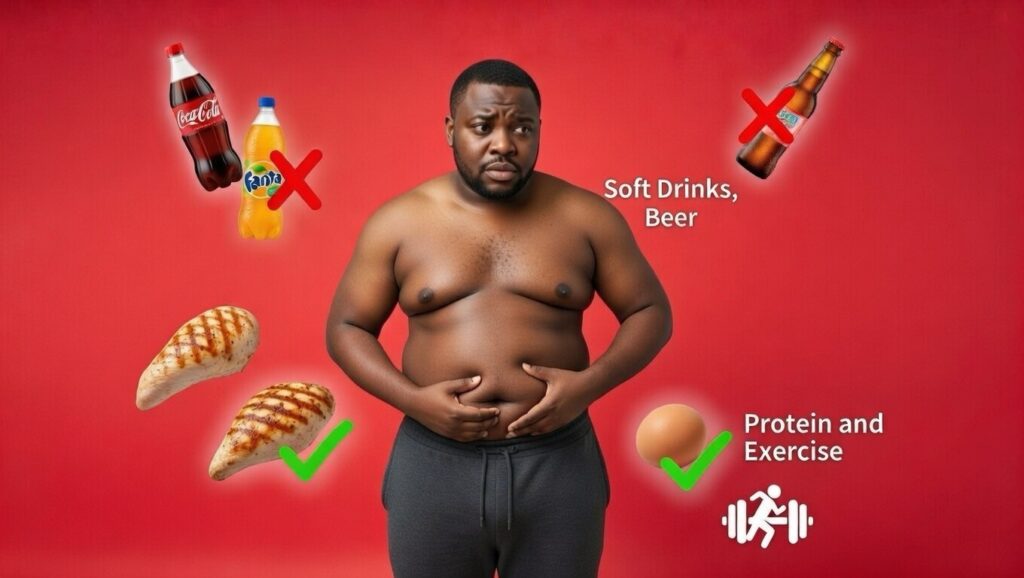
How to reduce belly fat is one of the most searched weight loss questions in Nigeria. Well, to be honest, you can’t target belly fat specifically. You can’t do sit-ups and lose fat only from your stomach because fat loss happens across the whole body. In fact, the belly is usually one of the last areas to reduce.
That said, some things specifically accumulate belly fat, so if you tackle them, it’s easier to achieve results. We’ve listed them below:
- Cut down on sugar and sugary drinks. Excess sugar, especially from soft drinks and processed snacks, is a big cause of belly fat. A 50cl bottle of Coke has about 53g of sugar, which is more than twice the recommended daily limit.
- Reduce refined carbohydrates. White rice, white bread, and white flour products cause blood sugar to spike, which promotes fat storage. Switch to ofada rice, whole wheat bread, and oats where possible.
- Increase protein intake. High-protein diets can reduce belly fat by improving metabolism and reducing your appetite. For such meals, focus on fish, eggs, beans, and lean chicken.
- Add abdominal exercise. You can’t spot-reduce fat, but exercises like planks, crunches, and leg raises strengthen the core. Over time, they improve your belly’s appearance as overall fat reduces.
- Manage stress. High levels of the stress hormone cortisol can cause your body to store more belly fat. Likewise, poor sleep and chronic stress make it harder to lose weight.
Ways to Lose Weight in Nigeria Naturally
Many people wonder how to lose weight naturally in Nigeria, and that involves making intentional lifestyle changes. Follow our tips below to get started:
1. Eat Healthy Food Portions
Most Nigerians are not eating the wrong foods, but they’re consuming too much of the right ones. A study of portion sizes in southwestern Nigeria showed the average eba serving at one meal was around 395g. That means close to 400 calories without any soup yet. If you reduce your swallow to a fist-sized ball (150 to 200g), you immediately cut 150 to 200 calories from the meal.
2. Eat More Protein
We can’t overemphasise the fact that protein is the most filling macronutrient. It takes longer to digest, reduces hunger hormones, and burns more calories during digestion than carbohydrates or fat. You can lose fat naturally by adding fish, eggs, beans, or lean chicken to your daily meals.
3. Drink More Water

Grabbing a cup or bottle of water to drink is easy, yet many people can’t do it. Worse still, some Nigerians confuse thirst for hunger and eat when they should be drinking. Learn to avoid that.
When you drink a full glass of water before a meal, it can reduce the amount you eat by 10 to 15%. The standard is to aim for 2 to 3 litres of water per day.
4. Move More Every Day
You don’t need a gym to start losing weight because a simple walk, which is completely free, works wonders. A 30-minute brisk walk burns approximately 150 to 200 calories, depending on your weight. For comparison, that’s the equivalent of skipping one bottle of soft drink per day. If you walk consistently 5 days a week, you burn 750 to 1,000 calories.
5. Stop Eating Late at Night
Your body’s metabolism slows down after 9 PM. For this reason, calories you eat late at night are more likely to be stored as fat because you’re not active to burn them. If you must eat late, keep it light. A small bowl of fruit, a boiled egg, or plain soaked garri with no sugar can help.
GymSquare Plan on How to Lose Weight in 7 Days at Home
We’ll be realistic here: 7 days is not enough time to lose a huge amount of weight. That said, a structured week-long approach can begin to make real progress and help you lose 1 to 2 kilograms. The loss will come mostly from reduced water retention and early fat burning.
On that note, check out our practical 7-day plan below:
| Day | Focus |
| Day 1 | Clear out sugary drinks and noodles. Replace soft drinks with water or unsweetened zobo, and reduce your swallow portion by half. |
| Day 2 | Add a 30-minute walk. Eat beans with grilled fish for at least one meal. |
| Day 3 | Cut out fried food for the day. Instead, grill, steam, or boil everything. |
| Day 4 | Eat 3 meals with no snacking between them. Each meal should have protein + vegetables + a small carb. |
| Day 5 | Replace your regular breakfast with eggs or oatmeal. Drink water before every meal. |
| Day 6 | Do a 45-minute workout at home: jumping jacks, squats, planks, and walking. |
| Day 7 | Weigh yourself. Compare to Day 1. Review what you ate and decide which changes you can keep permanently. |
The purpose of 7 days is not a dramatic transformation. It’s to build momentum. Weight loss becomes real when you repeat healthy habits every week, consistently for months. If you suffer for one week and go back to old habits, it won’t change anything.
Healthy Drinks for Weight Loss in Nigeria

What you drink matters almost as much as what you eat. Liquid calories are easy to overlook, but they can easily add up. For instance, a single bottle of Maltina malt drink has around 190 calories. If you drink one every day, that’s over 5,700 extra calories per month from drinks alone. It’s equivalent to about 0.7kg of fat.
Here are the best drink choices for weight loss in Nigeria:
- Water. No doubt, this is the best drink for weight loss. It’s free, effective, and has zero calories.
- Zobo (unsweetened). Made from dried hibiscus leaves, zobo is low in calories and contains antioxidants. Skip the sugar when making it at home.
- Ginger tea. Ginger has mild thermogenic (calorie-burning) properties. A cup of ginger tea with no sugar is a great morning or evening drink.
- Green tea. Green tea contains catechins, which have been shown in studies to slightly boost fat burning. A cup or two per day helps.
- Kunu (no sugar added). Made from millet or sorghum, kunu is a nutritious local drink. Be careful about added sugar in commercial versions.
- Lemon water. Warm water with fresh lemon juice in the morning is a common weight loss habit. It promotes hydration and may mildly support digestion.
Avoid soft drinks, bottled fruit juices, sweetened ginger beer, and alcohol. We’re not against any business, but such drinks are either high in sugar or calories, or both.
Our Final Take
Knowing how to lose weight in Nigeria doesn’t require foreign superfoods, expensive gym memberships, or extreme sacrifice. You just have to understand your calorie intake and make smarter choices with the foods already in your diet. Stick to it and build consistent habits over time.
Nigeria already has some of the best weight-loss foods in the world. We’re talking about beans, fish, vegetables, unripe plantain, and pepper soup. The issue isn’t the food itself, but the portion sizes. Plus the oil, sugary drinks, and sedentary lifestyle most people live.
While trying to lose weight in Nigeria, start small. Swap one soft drink for water, and reduce your swallow by half. Add fish to a meal you normally eat without it, and walk for 20 minutes three times a week. These changes are not dramatic, but if you do them consistently for 90 days, the result will speak for itself.
How to Lose Weight in Nigeria FAQs
How much water should I drink to lose weight?
You should drink a full glass of water 20 to 30 minutes before each meal for weight loss. It reduces how much you eat at that meal by making your stomach partially full.
What to eat at night when hungry and trying to lose weight?
Some good options to eat include a boiled egg, a banana, or a small bowl of plain soaked garri with just a little groundnut and no sugar. A glass of water can also help.
What is the best breakfast for weight loss?
The best breakfast for weight loss in Nigeria should be high in protein and fibre and low in simple carbohydrates. Our top picks are boiled eggs with whole wheat bread, oats, and two pieces of moi moi with pap (no sugar).
Which soup is best for fat loss?
Pepper soup is the best Nigerian soup for fat loss because it has low oil and more water. Okra soup made with minimal oil and lean fish is another excellent option.
What is the most powerful food for weight loss?
There is no single most powerful food for weight loss. However, if we had to pick the best option available in Nigeria, it would be beans. Beans are high in both protein and fibre, with low fat.